
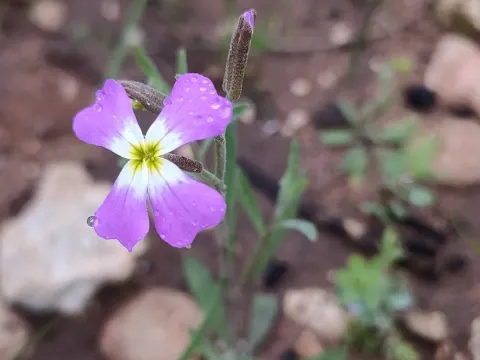
Malcolmia triloba
Malcolmia triloba
Malcolmia triloba is an annual herbaceous plant belonging to the Brassicaceae family. In regions with a temperate climate, seeds are sown directly into open ground in spring, once the soil temperature reaches 10-12 degrees Celsius.
What the section contains
Malcolmia triloba
For uniform germination, the optimal time for sowing is April or early May. The seeding depth should not exceed 0.5–1 centimeter, as the small seeds require shallow placement for effective emergence.
The sowing pattern suggests a distance between plants of 15 to 20 centimeters. This is crucial for ensuring adequate ventilation and preventing excess moisture, which can lead to root rot development.
Seedlings usually appear 7–10 days after sowing, provided that substrate moisture is maintained. After the first true leaves appear, crops should be thinned to promote a healthy root system.
The crop is characterized by a rapid development cycle, making it possible to conduct a second sowing in mid-summer to achieve a decorative effect during the autumn period.
Malcolmia triloba has moderate requirements for growing conditions, preferring open, sunny locations. Lack of light leads to stem elongation and reduced flowering intensity, which negatively affects the appearance of the plants.
The plant grows well in light, well-drained soils with a neutral or slightly alkaline reaction. Heavy clay soils require preliminary improvement through the addition of sand or compost to ensure proper drainage.
A crucial factor is moderate watering: the plant does not tolerate stagnant water in the root zone, which triggers fungal infections. In dry periods, watering should be performed in the morning, avoiding wetting the flowers.
The crop is relatively cold-resistant; however, temporary cover with agricultural fabric may be required during sharp late frosts. Overall, the plant is quite adaptable to different soil types if basic agronomic practices are followed.
For intensive growth during the budding phase, one can apply complex mineral fertilizers with a reduced nitrogen content to stimulate the formation of floral buds rather than vegetative mass.
Like other members of the Brassicaceae family, Malcolmia is prone to attacks by flea beetles, which can destroy young seedlings within a few days. For prevention, timely soil cultivation and the use of insecticides during mass pest emergence are recommended.
Under conditions of high humidity and poor air circulation, there is a risk of powdery mildew infection. The disease manifests as a whitish coating on the leaves, requiring treatment with systemic fungicides.
Root rot and damping-off are dangerous pathogens arising from excessive watering and poor soil aeration. Affected specimens must be immediately removed from the plot to prevent the spread of fungal spores.
Aphids can colonize apical shoots, sucking cell sap and deforming the leaves. The use of biological agents or soap solutions is effective in controlling the population of this pest at early stages.
An important protection measure is crop rotation: it is not recommended to plant Malcolmia after other cruciferous crops to reduce the soil's infectious load.