
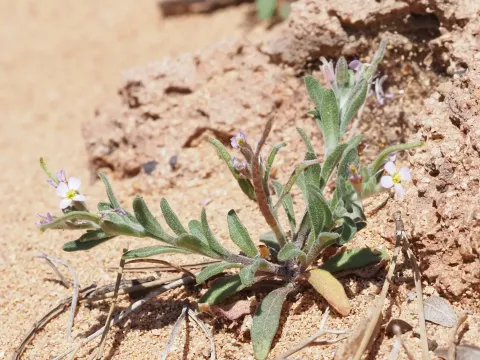
Maresia nana
Maresia nana
Maresia nana is an annual herb belonging to the Brassicaceae family. This species is recognized for its specialized adaptation to harsh, arid environments, demonstrating a unique strategy for survival in nutrient-poor and moisture-limited habitats where other plants struggle to establish.
What the section contains
Maresia nana
The geographic distribution of this species is primarily concentrated across the Mediterranean region and North Africa. It is frequently associated with sandy soils, dunes, and dry rocky slopes, where it benefits from high solar exposure and well-drained substrate conditions characteristic of these ecosystems.
Botanically, Maresia nana features a prostrate or low-growing stem structure, which minimizes wind exposure. The leaves are generally small to reduce transpirational water loss, and the plant produces typical cruciferous flowers that ensure rapid pollination, followed by an efficient seed production phase.
The environmental requirements are strictly linked to its status as a xerophytic plant. It requires high light intensity, excellent soil aeration, and low soil humidity. The species is highly sensitive to waterlogging, which can rapidly compromise its root health and overall development cycle.
While Maresia nana is not a traditional agricultural crop, it remains a subject of study for botanists and ecologists. Its genetic makeup and resilience to extreme conditions provide valuable insights into the evolutionary biology of plants in arid climates, contributing to our understanding of plant biodiversity conservation.