
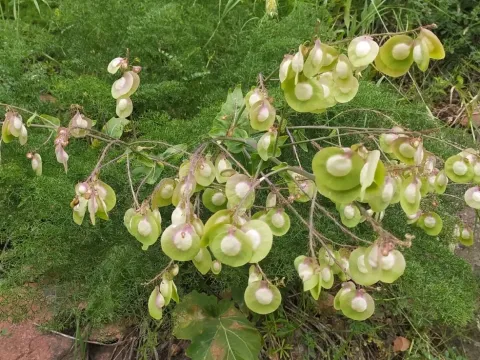
Megacarpaea
Megacarpaea
Megacarpaea, a member of the Brassicaceae family, is a perennial herbaceous plant with significant agricultural potential in arid and semi-arid regions. The optimal sowing time is early spring, as soon as soil conditions allow, to capitalize on residual winter moisture for germination.
What the section contains

Megacarpaea
The seeds should be placed at a depth of 2–3 centimeters. A firm seedbed is essential, and post-seeding rolling is highly recommended to improve soil-to-seed contact, which significantly boosts the uniformity of emergence.
Standard field practices involve row planting with spacings of 30 to 45 centimeters. This arrangement provides enough space for the plant to develop a robust leaf rosette during the first season of growth, ensuring strong root establishment.
Targeting a plant density of 400,000 to 500,000 plants per hectare is ideal. Avoiding overcrowding is crucial, as the plant features a deep, powerful taproot that requires sufficient volume in the soil profile to thrive.
In regions with mild winters, late autumn sowing can be a viable strategy. This approach allows the plant to initiate growth at the very beginning of the spring season, providing a head start on green fodder production compared to annual crops.
The crop thrives in deep, well-aerated sandy loam or light loam soils. Heavy clay soils, which are prone to waterlogging, are unsuitable as they increase the risk of root rot and inhibit the development of the plant's massive root system.
Megacarpaea is noted for its exceptional drought tolerance, a trait that makes it suitable for regions where irrigation is limited. Its ability to penetrate deep into soil layers allows it to tap into moisture reserves inaccessible to shallower-rooted forage crops.
A neutral to slightly alkaline soil pH, within the range of 6.5 to 7.5, is optimal for nutrient uptake. In more acidic soils, liming is recommended to optimize the chemical environment and enhance plant vigor.
As a light-demanding crop, site selection should prioritize open fields without shade from surrounding vegetation. Sufficient sunlight is key to maximizing photosynthetic activity and ensuring the high nutrient density required for high-quality livestock feed.
Balanced fertilization, particularly with phosphorus and potassium, is recommended at the stage of soil preparation. Nitrogen may be applied to boost vegetative growth, but should be managed carefully to ensure the forage remains safe for livestock consumption.
The yield of green biomass depends on environmental conditions and the intensity of water management. With favorable conditions, Megacarpaea can produce several cuttings per growing season, offering a consistent supply of fodder.
To maximize forage quality, harvesting should occur during the budding phase. At this stage, the plant has an optimal protein-to-fiber ratio, making it highly palatable and nutritious for various livestock, including sheep and cattle.
The crop demonstrates strong regenerative capacity. After cutting, the plant rapidly produces new shoots, provided there is adequate soil moisture and nutrient availability in the aftermath stage.
Long-term productivity is generally high, though management may need to address potential yield decline after 3–4 years. Periodic light cultivation or overseeding can help maintain the stand density and productivity of the forage field.
Seed production requires leaving some areas unharvested until full maturity. Seed harvesting should be performed when the siliques turn brown, ensuring that the seeds are fully developed to guarantee high germination rates for future seasons.
The main pests affecting Megacarpaea are cruciferous flea beetles, which can cause significant damage to young seedlings. Monitoring during the early growth phase is vital to mitigate the risk of stand loss due to insect feeding.
The rapeseed blossom beetle (Meligethes aeneus) can also pose a threat during the reproductive stage. By feeding on the buds, these insects reduce the potential for flower formation and seed set, impacting the overall productivity of the crop.
Fungal diseases, including powdery mildew and various root rots, represent a risk, particularly in high-humidity or poorly drained areas. These pathogens can stunt growth and, in severe cases, cause mortality in mature plants.
Good agricultural practices, such as a multi-year crop rotation (avoiding back-to-back planting of Brassicaceae), are the most effective way to minimize pest and disease outbreaks without excessive reliance on synthetic pesticides.
In cases of high pest pressure, integrated pest management (IPM) strategies should be employed. This includes the use of selective insecticides that are safe for pollinators and livestock, applied only when economic injury thresholds are reached.
Harvesting for hay requires the use of mowers equipped with conditioners. Crimping the stems is essential to break the epidermis, which drastically reduces drying time and preserves the valuable vitamins and minerals in the plant material.
A minimum stubble height of 10 centimeters must be maintained during cutting. This preserves the crown buds and vital reserves, enabling the plant to recover and produce subsequent cuttings throughout the season.
When used for silage, the biomass should be chopped into 2–3 centimeter pieces to ensure compact storage in silos or bales. Proper packing is critical to displace oxygen and encourage the rapid development of beneficial lactic acid bacteria.
Prompt processing post-harvest is crucial to avoid nutrient leaching and oxidation. Ensuring that the forage is quickly transported from the field to the storage facility helps maintain its biological and nutritional integrity.
For seed crops, post-harvest drying is essential to bring moisture content down to 12-14%. Cleaned seeds should be stored in a cool, dry place to prevent heating and spoilage, maintaining their vitality for future sowing operations.