
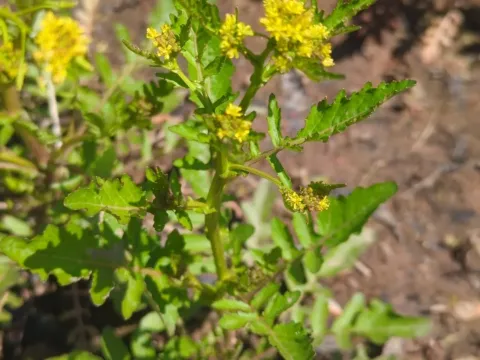
Marsh yellowcress
Rorippa palustris
Marsh yellowcress is a member of the Brassicaceae family, typically growing as an annual or biennial plant. It is highly valued for its adaptability to wetland environments and its rapid growth rate.
What the section contains
Marsh yellowcress
Sowing should be done in moist, nutrient-rich soil. The seeds are very small and require consistent contact with wet soil to germinate effectively, so irrigation must be maintained during the early stages.
For cultivation purposes, row sowing is recommended with spacing of about 20–30 centimeters. This provides enough air circulation and space for the plants to develop full, lush leaf rosettes.
Seeds should be covered with only a very thin layer of soil. Compacting the surface lightly after sowing helps facilitate the upward movement of moisture, which is critical for successful germination.
The timing of the sowing is usually in early spring. Because the plant is well-adapted to high moisture, it can be planted earlier than many other crops without the risk of rot, provided the soil is not completely stagnant.
The primary requirement for this crop is abundant moisture. In nature, it thrives in floodplains, marshy edges, and damp soils where other crops might suffer from root suffocation.
It prefers fertile, silty, or loamy soil types. The presence of high organic matter helps sustain the vigorous growth required for high leaf yield, especially in intensive farming systems.
Light levels should be high, as the plant responds well to full sunlight. While it can survive in partial shade, optimal biomass production is significantly higher under direct sun exposure.
Climatic conditions should favor moderate temperatures. The plant is prone to bolting and hardening when exposed to high heat combined with dry winds, so maintaining a cool microclimate is beneficial.
Effective management includes regular monitoring of soil fertility. Applying organic fertilizers, such as well-rotted compost, before planting significantly boosts the overall quality of the harvest.
Crucifer flea beetles are the most significant pest for marsh yellowcress. They target the young leaves and can quickly cause severe damage if left unmanaged, necessitating vigilant scouting.
Fungal diseases, including powdery mildew, can appear in crowded or poorly ventilated conditions. Reducing plant density is a key agronomic step to prevent the rapid spread of these pathogens.
Cabbage white butterfly larvae are another common threat. These insects can quickly consume large amounts of leaf tissue, requiring prompt biological or mechanical intervention to protect the crop.
Root rot issues can occur if the water becomes completely stagnant and oxygen levels in the soil drop too low. Proper management of water flow or drainage is essential for long-term crop health.
Integrated Pest Management (IPM) strategies are recommended. This includes crop rotation and the use of protective covers in the early growth stages to shield the crop from initial insect attacks.
Harvesting is best performed before the plant enters the bolting phase. Once the plant begins to produce flower stalks, the leaves lose their tenderness and flavor profile, decreasing their market value.
Mechanical or manual cutting is suitable for this crop. By cutting the plants a few centimeters above the ground, growers can encourage regrowth, often allowing for multiple harvests within a single season.
The harvested product must be cooled immediately after picking. Due to the high water content of the leaves, they wilt quickly in room temperature, making cold chain management essential.
For processing, the leaves should be washed in cold water and kept in humidity-controlled packaging. This preserves the freshness and texture that are expected by culinary consumers.
If producing seeds, the harvest occurs later in the season. The pods should be harvested once they turn light brown but before they split, as the seeds are extremely small and easily lost.