
McDonald's rockcress
Arabis macdonaldiana
Description
Growing requirements
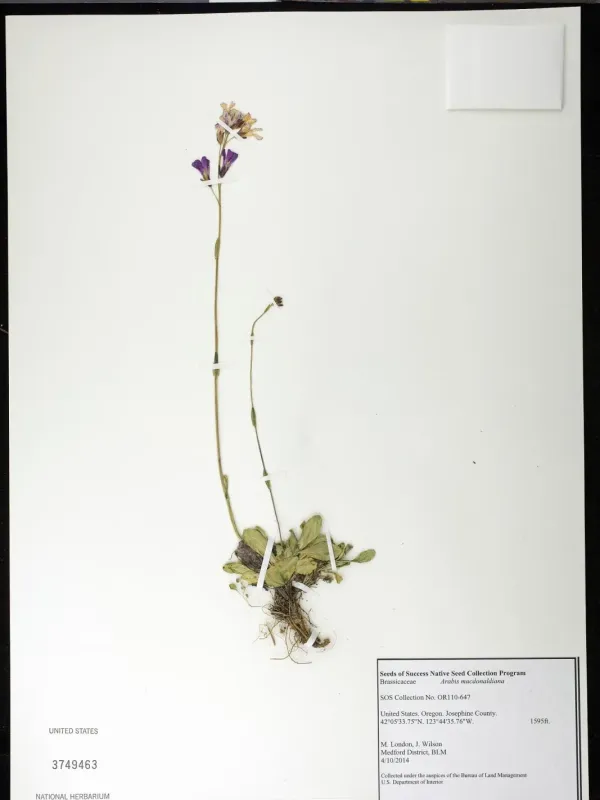
McDonald's rockcress (Arabis macdonaldiana) is a rare perennial herbaceous plant belonging to the Brassicaceae family. This species is native to specific geographical regions, primarily in Northern California, and is listed as a protected entity due to its limited distribution.
The plant is famously known for its extreme specialization in thriving on serpentine soils. These soils are often nutrient-poor and contain high concentrations of metals, creating a harsh environment where few other plants can establish successfully.
Botanically, it features a rosette of leaves and produces flowers that are adapted to the rocky, well-drained slopes of its native habitat. It relies on specific microclimates that provide enough moisture while maintaining excellent drainage to prevent root decay.
From an agricultural standpoint, this plant is not considered a crop. It lacks commercial application due to its rarity and slow growth rate, making it an object of interest only for conservationists and professional botanists studying extremophile plant physiology.
Conservation efforts are critical for the survival of Arabis macdonaldiana. Protecting its native ecosystem from urban development and land degradation is the only way to ensure the continued presence of this unique member of the mustard family in the wild.