
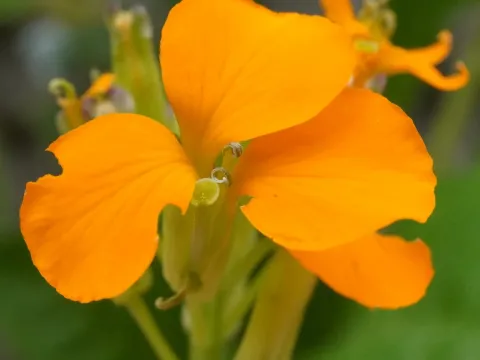
Marshall's Wallflower
Erysimum marshallii
Sowing of Erysimum marshallii seeds is typically conducted in spring, during April or May, when soil temperatures have consistently risen. Direct sowing into prepared garden beds is the preferred method for this perennial species.
What the section contains
Marshall's Wallflower
Seeds should be lightly covered with a thin layer of fine soil or vermiculite, as they require some light exposure for germination. Maintaining consistent soil moisture is crucial during the initial seedling establishment phase.
Seedlings should be thinned to a spacing of approximately 25-30 cm apart to ensure adequate airflow. This spacing is vital for preventing crown rot and maintaining a healthy plant structure.
For early bloomers, seeds can be sown indoors in late winter, around February or March. Using seed trays with a well-draining starting mix provides the best results for greenhouse propagation.
Hardening off indoor-grown seedlings before final transplanting is essential to acclimatize them to outdoor conditions. This process should take place over several days, gradually increasing exposure to sun and wind.
Marshall's wallflower belongs to the Brassicaceae family and is recognized for its vibrant, fragrant flowers. It thrives in open, sunny locations that provide full exposure to sunlight throughout the day.
The plant requires well-drained, gritty, or sandy soil to prevent root rot. It performs poorly in heavy, waterlogged clay soils, so soil amendment with organic matter or gravel is highly recommended.
While drought-tolerant once established, young plants benefit from regular watering during their active growth period. Over-watering should be avoided at all costs, as the plant prefers drier conditions.
The plant performs best in neutral to slightly alkaline soil conditions. If the soil is overly acidic, adding agricultural lime can help adjust the pH to the optimal range for this species.
General maintenance involves pruning spent flower stems after the first flush of blooms. This encourages the plant to maintain a compact, tidy habit and may trigger a secondary period of flowering.
Clubroot is a significant soil-borne disease affecting many members of the Brassicaceae family. It causes stunted growth and root deformities, making contaminated soil unsuitable for replanting without treatment.
Powdery mildew is a common fungal issue that manifests as a white, dusty layer on leaves. Improving air circulation around the plants and avoiding overhead irrigation can effectively minimize infection risks.
Flea beetles are a notorious pest for young wallflower plants, often leaving characteristic small holes in the foliage. Prompt application of appropriate horticultural dust or sprays is necessary for control.
Aphid infestations are frequently observed on the developing flower buds. These sap-sucking insects can stunt flower development if left unmanaged, requiring intervention with organic insecticidal soaps.
Slugs and snails can also damage young shoots in damp spring weather. Implementing physical barriers like crushed eggshells or using organic bait traps can protect young plantings from these persistent garden pests.