
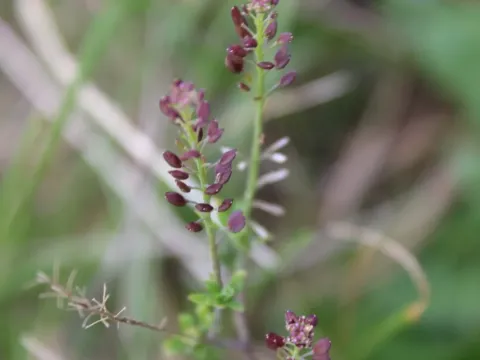
Hyssop-leaved cress
Lepidium hyssopifolium
The sowing schedule for Lepidium hyssopifolium depends on local climatic zones and intended use. Early spring sowing, when soil temperatures reach 5–8 degrees Celsius, is generally recommended for optimal germination and early development.
What the section contains
Hyssop-leaved cress
In regions with mild winters, late autumn sowing is an option, allowing seeds to naturally stratify during winter. This practice often results in more vigorous spring growth and better establishment of the plant's root system.
Seeding rates should be adjusted based on seed purity and germination percentage. Row planting with a spacing of 30–45 centimeters is standard practice to allow for mechanical weed control and sufficient aeration between plants.
Seed depth should remain shallow, typically 1–2 centimeters, to accommodate the small size of the seeds. Over-deepening can lead to delayed emergence and energy exhaustion, significantly impacting the uniformity of the stand.
Post-sowing soil compaction is an essential step to ensure consistent seed-to-soil contact. This practice promotes capillary water movement toward the seeds, which is critical for rapid and uniform germination in field conditions.
Hyssop-leaved cress belongs to the Brassicaceae family and is generally hardy, thriving in various soil types including well-drained loams and sandy soils. While adaptable, it prefers neutral to slightly alkaline pH levels for best performance.
The plant exhibits high drought tolerance, making it a viable candidate for agricultural use in regions prone to water scarcity. It maintains growth even under moderate water stress, provided it has established a deep root system.
As a light-demanding crop, it performs best in open, non-shaded areas. Exposure to direct sunlight is necessary to maximize vegetative biomass production and prevent the development of weak, etiolated stems.
Temperature resilience is a key characteristic, as the plant can withstand cool weather and minor frosts during the early stages of growth. This flexibility allows producers to start field operations early in the season.
Effective management includes regular inter-row cultivation during the initial growth stages. Keeping the field free of competitive weeds is crucial for the establishment of the crop, as it helps in resource allocation toward the main plant.
Crucifer flea beetles are among the primary pests affecting Hyssop-leaved cress. These insects can cause significant damage to young seedlings, requiring vigilant monitoring and timely interventions to protect the early-stage biomass.
Fungal pathogens such as downy mildew and various root rots pose threats, especially in humid or waterlogged conditions. Crop rotation is essential to break the infection cycle and maintain soil health over multiple seasons.
Maintaining field hygiene by removing crop residues helps reduce the inoculum level of pathogens. Seed treatment with appropriate fungicides or biological agents can further protect the crop from soil-borne diseases during initial stages.
Over-fertilization with nitrogen can sometimes make the plants more susceptible to fungal infections by encouraging soft, lush growth. A balanced nutritional approach is recommended to ensure robust plant health.
Frequent field scouting allows for the early detection of pests or disease symptoms. Adopting an integrated pest management strategy ensures minimal reliance on chemical pesticides while maintaining the productivity of the crop.
The optimal harvest time for vegetative biomass is during the mass flowering stage, as the plant's nutritional density is at its peak. Timing the harvest accurately ensures that the quality meets agricultural requirements.
Harvesting equipment should be calibrated to maintain a specific cutting height to avoid damaging the crown. This ensures a quicker recovery if the crop is intended for multiple cuts or managed as a perennial plant.
For seed production, harvesting begins when the pods at the base of the plant turn brown. Careful handling is required during mechanical harvesting to prevent the pods from shattering and losing seeds in the field.
Immediately after cutting, the material must be transported to a drying facility. Avoiding the accumulation of wet biomass in large piles is critical to prevent fermentation and spoilage, which can drastically reduce feed quality.
Final processing involves cleaning the seeds and drying them to a moisture content of 10–12 percent. Proper storage in cool, well-ventilated areas ensures the longevity and viability of the seeds for future planting seasons.