
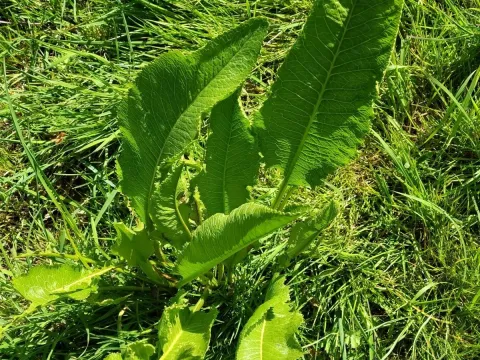
Horseradish
Armoracia
Horseradish (Armoracia rusticana) is a perennial plant of the Brassicaceae family. It is typically propagated vegetatively, as commercial varieties are often sterile or do not grow true from seed.
What the section contains
Horseradish
Planting is best performed in early spring as soon as the soil is workable, or in late autumn before the ground freezes. This timing allows the roots to establish before active vegetative growth.
Root cuttings, often called "sets," should be 15–25 cm long and about 1–2 cm in diameter. These are planted at an angle, with the top end positioned about 5 cm below the surface.
The plant is highly invasive due to its ability to regenerate from small fragments of root left in the soil. Therefore, selecting a permanent site is important to prevent it from spreading.
Proper spacing is crucial for root expansion. Rows should be spaced at least 60–80 cm apart, with individual plants placed 30–40 cm apart within the row to ensure adequate nutrient access.
Horseradish thrives in deep, fertile, well-drained loamy soils. Rocky or compacted soil often causes the roots to fork or become woody, which reduces their commercial value.
The plant requires consistent moisture, especially during the peak growing season. However, it is sensitive to waterlogged conditions, which can lead to rapid root decay and disease.
Full sun is ideal for maximum root development. While horseradish can tolerate partial shade, insufficient light often results in smaller roots with lower concentrations of pungent compounds.
Soil pH should ideally range between 6.0 and 7.0. While the plant is quite hardy, maintaining optimal acidity levels supports the best nutrient uptake and overall plant vigor.
Horseradish is extremely frost-hardy and can overwinter in a wide range of climates. The roots are often stimulated by exposure to cold temperatures, which can enhance their flavor profile.
Average yields for horseradish vary based on soil quality and field management, typically ranging from 10 to 20 tons per hectare in commercial production systems.
The plant is usually harvested after one or two full growing seasons. Two-year-old plants tend to produce larger, more robust roots compared to those harvested annually.
Marketable yield is defined by the size, straightness, and lack of branching in the main taproot. High-quality roots are clean, firm, and free from external blemishes.
Yield management includes frequent weeding during the early stages of establishment, as horseradish is a poor competitor when small and can be easily overwhelmed by faster-growing weeds.
Careful extraction of the roots is necessary during harvest to maintain the integrity of the main taproot, as mechanical damage can lead to post-harvest storage losses.
White rust (Albugo candida) is a common fungal disease that affects the foliage. It can reduce the plant's ability to photosynthesize, eventually limiting the growth of the root system.
The horseradish flea beetle is a major insect pest that feeds on leaves, creating small holes. Severe infestations can significantly stunt the growth of young plants.
Root rot caused by various soil-borne pathogens often occurs in poorly drained soils. Symptoms include dark, mushy spots on the roots that spread rapidly in storage.
- Horseradish flea beetle
- White rust
- Aphids
- Root rot
Integrated pest management, including crop rotation and the removal of infected debris, is the best strategy to control these threats without excessive chemical use.
Harvesting usually takes place in late autumn, typically October or November, when the foliage begins to die back and the plant enters dormancy.
The soil is loosened using forks to carefully lift the roots. Harvesting should be performed on a dry day to ensure the roots are not covered in excessive mud, which facilitates cleaner storage.
After lifting, excess soil is brushed off, and the foliage is trimmed back to the crown. The roots are then sorted by size, with damaged or small roots typically discarded or used for future propagation.
For storage, roots are kept in a cool, dark environment. Packing them in damp sand or sawdust helps maintain humidity and prevents the roots from drying out or losing their potency.
Commercial producers often store roots at near-zero temperatures (0–1°C) to maintain peak quality for market delivery throughout the winter and early spring months.