
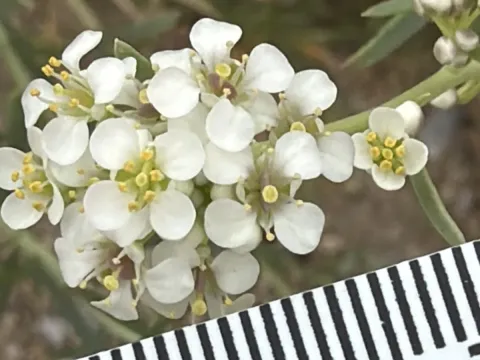
Fremont's pepperweed
Lepidium fremontii
Fremont's pepperweed, native to arid regions, is best sown in the autumn season to allow seeds to benefit from natural cool-moist cycles for germination.
What the section contains
Fremont's pepperweed
Seeds should be planted at a shallow depth, usually covered by a thin layer of soil, as they require minimal resistance to emerge successfully.
A loose, sandy soil structure is essential during the sowing phase to prevent the formation of crusts that could impede the development of small sprouts.
Optimal row spacing ranges between 40 to 50 centimeters, allowing each plant enough access to limited soil moisture and nutrients.
Post-sowing, light compaction of the soil surface ensures better capillary movement of moisture toward the seeds, promoting a higher emergence rate.
Belonging to the Brassicaceae family, Lepidium fremontii is a true xerophyte that thrives in hot, dry climates with excellent soil drainage.
The crop performs best in sandy or rocky soils with alkaline pH levels, reflecting the environmental conditions of its natural desert habitat.
High solar radiation is crucial for the plant's metabolic processes; therefore, it must be grown in fully exposed locations without any canopy cover.
Temperature requirements include significant diurnal variation, which is characteristic of high-altitude or arid desert environments.
Fertilizer application should be kept to an absolute minimum, as excess soil nutrients, particularly nitrogen, can negatively impact the plant's structural integrity.
Fremont's pepperweed displays natural resilience against many common pests due to its specialized adaptations to hostile environments.
Fungal diseases are the primary threat, typically triggered by improper irrigation management or poor drainage leading to waterlogged soil.
Root damage by soil-borne insect larvae can cause significant mortality during the early seedling stage, requiring vigilant monitoring of soil health.
Cruciferous flea beetles may target the foliage, causing aesthetic and photosynthetic damage if populations are left unchecked during the growing season.
Integrated pest management strategies focusing on moisture control are the most effective way to prevent outbreaks of both pathogens and insect pests.
Harvesting the seed heads should occur precisely when they reach maturity and turn brown, indicating the optimal moisture content for long-term storage.
Farmers must time the harvest carefully to avoid the natural dehiscence of pods, which can lead to significant yield losses if delayed.
Post-harvest processing involves gentle cleaning to remove debris and drying the seeds in shaded, ventilated areas to maintain viability.
If harvesting leaf material for culinary or medicinal use, it is best gathered before the plant initiates its reproductive flowering phase.
Proper storage of the harvested material in dry, cool conditions ensures that the seeds retain their high germination percentage for subsequent planting cycles.