
Fibigia
Fibigia
Fibigia is a genus of perennial herbaceous plants belonging to the Brassicaceae family. Known for its remarkable resilience, it thrives in environments that are typically challenging for conventional crops, such as rocky slopes and arid regions.
What the section contains


Fibigia
The native distribution of Fibigia extends across the Mediterranean, the Caucasus, and the Middle East. It has evolved to survive in semi-desert climates, making it an excellent candidate for agricultural diversification in water-scarce areas.
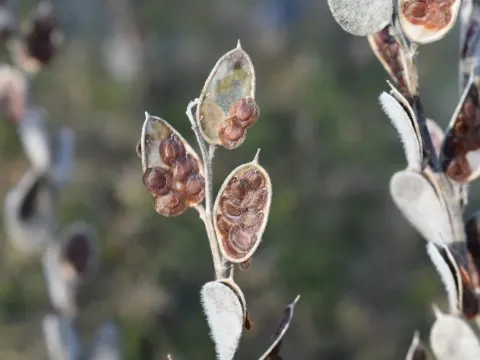
The plant is characterized by a deep taproot system, which allows it to access groundwater during prolonged droughts. Its botanical structure includes a basal rosette of leaves and distinctive fruit capsules, which are typical for the mustard family.
Agronomic requirements emphasize the necessity of well-drained, porous soils. Fibigia does not tolerate waterlogging, which often leads to root rot; therefore, light, sandy, or rocky soils are ideal for optimal plant development.
In terms of economic and ecological utility, Fibigia is investigated for its potential in land rehabilitation and soil stabilization. By preventing erosion and requiring minimal inputs, it serves as a valuable resource for sustainable agricultural practices.