
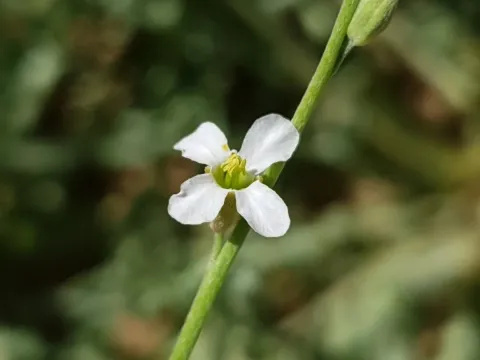
Farsetia
Farsetia
The planting of Farsetia must be synchronized with the onset of seasonal moisture to ensure adequate germination. Sowing is typically conducted in the early spring, once soil temperatures are consistently above 10-12 degrees Celsius.
What the section contains


Farsetia
Seeds should be sown at a shallow depth of 1 to 2 centimeters. Because the seeds are small, precise placement is essential for successful seedling emergence in arid environments.
Row planting with spacing between 30 and 45 centimeters is recommended to allow for easy mechanical weeding during the early stages of plant development.
After seeding, rolling the soil surface is a crucial step to improve soil-to-seed contact and enhance capillary action, which is vital for providing moisture to the germinating seeds.
Early sowing allows the plant to establish its deep root system, which is fundamental for its ability to survive the high temperatures and dry spells typical of its habitat.
Farsetia is a member of the Brassicaceae family and is highly adapted to arid and semi-arid conditions. It functions as a perennial plant with specific morphological features designed for water efficiency.
This crop thrives in light-textured soils, particularly sandy or loamy-sandy types, which must provide excellent drainage. Any waterlogging will significantly impede growth and lead to root decay.
Exposure to full sunlight is essential for the healthy growth of Farsetia. Shade or excessive humidity can cause the development of weak, etiolated stems that are susceptible to damage.
Management of soil moisture is key; while the plant is drought-resistant, occasional supplementary irrigation during the flowering phase can significantly improve biomass production.
The plant is known for its tolerance to saline soil conditions, making it a potentially valuable candidate for rehabilitating degraded or naturally saline land in arid climate zones.
Cruciferous flea beetles are the most significant pests for Farsetia. These insects primarily attack young seedlings, which can lead to stand failure if not managed promptly through monitoring.
Fungal diseases, including powdery mildew, may occur during periods of high atmospheric humidity or poor air circulation within the canopy. Improving field spacing is the most effective cultural control measure.
Weed competition presents a major challenge in the early development stages. Because Farsetia grows relatively slowly at the start, weeds can easily outcompete it for nutrients and water.
Aphids may occasionally infest the plants, particularly during the flowering stage, potentially impacting seed set. Integrated pest management strategies are advised to keep populations under economic thresholds.
Effective management also requires careful observation for any sign of root-related pathogens, which are often encouraged by poor soil aeration and water accumulation.