
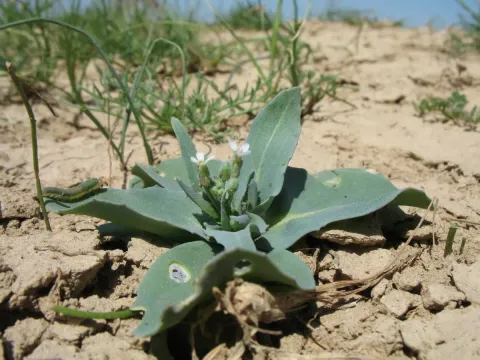
Goldbachia
Goldbachia
Goldbachia is characterized by a short growth cycle, making early spring sowing essential to maximize the use of available soil moisture.
What the section contains

Goldbachia
Seeds are typically sown as soon as the soil reaches a temperature of 5–7 degrees Celsius, which allows for rapid germination in the early spring.
Proper sowing depth is crucial for this small-seeded crop; a depth of 1 to 2 centimeters is optimal to ensure consistent emergence across the field.
Using precision seed drills is recommended to achieve an even plant density, which prevents excessive competition and promotes uniform maturity.
Completing the sowing process early in the season is vital to ensure that the plants complete their biological cycle before the onset of summer heat waves.
Belonging to the Brassicaceae family, Goldbachia is a resilient plant well-adapted to the ecological conditions of arid and semi-arid regions.
The crop thrives in well-drained, light-textured soils such as sandy loams, which prevent water stagnation and promote deep root development.
Goldbachia requires full sun exposure throughout the day; even partial shading can significantly reduce vegetative biomass and seed production.
The plant demonstrates high tolerance to soil salinity and can grow on lands where other traditional crops might struggle due to nutritional limitations.
While efficient at water uptake, the plant requires consistent moisture during the vegetative stage to establish a robust canopy before flowering.
Crucifer flea beetles represent the most significant pest pressure, capable of causing severe damage during the seedling stage of development.
Aphid infestations can occur during warmer periods, leading to stunted plant growth and a decrease in the overall quality of the harvested seed.
Fungal diseases like downy mildew may emerge if environmental conditions include high humidity and poor air circulation within the field.
Effective pest management involves integrated strategies, including the use of certified seeds and proper rotation to minimize the build-up of soil-borne pathogens.
When chemical intervention is required, it must be carefully timed to protect the plant while complying with local agricultural regulations for Brassicaceae crops.