
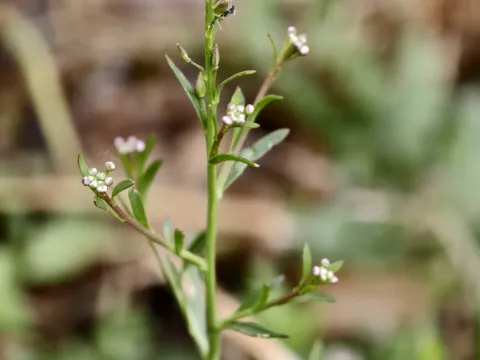
Grass-leaved pepperwort
Lepidium graminifolium
Grass-leaved pepperwort belongs to the Brassicaceae family. Sowing is typically carried out in early spring when soil conditions allow for proper seedbed preparation and germination.
What the section contains
Grass-leaved pepperwort
Winter sowing is another viable technique, where seeds are planted in the late autumn to trigger germination as soon as the ground thaws, maximizing spring growth cycles.
Given the small size of the seeds, precise drilling at a shallow depth of 1-2 centimeters is essential for maintaining uniform emergence across the field.
Seeding rates must be adjusted based on the intended end-use, ensuring that plant populations are optimized for either foliage yield or seed production.
Post-sowing compaction of the soil is highly recommended to improve seed-to-soil contact, which facilitates faster moisture absorption for the emerging seedlings.
This crop is recognized for its high tolerance to adverse environmental conditions, specifically drought and poor soil quality, characteristic of its xerophytic nature.
The ideal soil profile consists of well-drained, sandy, or light loamy textures with a neutral to slightly alkaline pH, which prevents root rot and stunted growth.
Full sun exposure is a primary requirement; the plant does not perform well in shaded areas and requires open fields to reach its full vegetative potential.
It displays significant resilience to thermal fluctuations, making it a reliable choice for cultivation in areas with unpredictable seasonal climate changes.
While the plant survives with minimal nutrients, balanced fertilization programs can significantly enhance the production of biomass in intensive farming systems.
Like many members of the Brassicaceae family, this plant is primarily vulnerable to damage by flea beetles during the early stages of seedling development.
Powdery mildew represents a major threat to the foliage, particularly in humid or stagnant air conditions, which can lead to significant yield reductions.
Integrated pest management strategies are crucial to mitigate these risks, focusing on crop rotation and maintaining clean field margins to prevent pathogen buildup.
Early detection through consistent scouting is the most effective way to address potential outbreaks of pests before they reach economic threshold levels.
Appropriate chemical or biological control measures should be applied only after careful assessment of the pest population to ensure sustainable farming practices.