
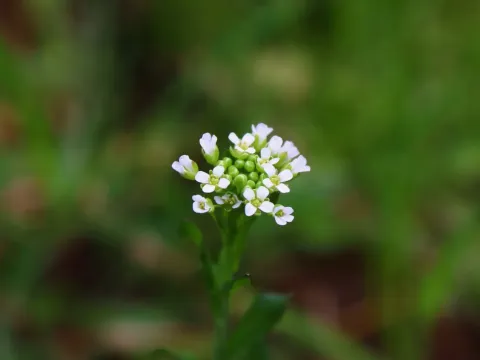
Garlic pennycress
Thlaspi alliaceum
Garlic pennycress is an annual winter plant, which often acts as a weed in cereal fields but can be cultivated for specific agricultural purposes. Seeds typically germinate in the autumn when soil temperatures reach 6 to 8 degrees Celsius, allowing the plant to overwinter in a rosette phase.
What the section contains
Garlic pennycress
For intentional planting, such as cover cropping or specialty use, sowing should occur in late August or early September to ensure proper establishment before the first heavy frost.
Spring growth initiates immediately after the snow melts, as soon as air temperatures stabilize at around 5 degrees Celsius. The species exhibits high seed vigor, and seeds can remain viable in the soil for several years.
When cultivating, a seeding density of approximately 300 to 400 seeds per square meter is recommended to provide optimal ground cover and outcompete unwanted vegetation.
Seeds should be sown at a shallow depth, not exceeding 1 to 2 centimeters, as the small seeds have limited energy reserves and may fail to emerge if planted too deeply.
Belonging to the Brassicaceae family, this plant is not overly demanding regarding soil fertility, though it performs best in well-aerated loams with a neutral to slightly alkaline pH level.
The plant is highly cold-hardy, capable of withstanding the significant temperature fluctuations characteristic of continental climates during the winter and early spring.
Light availability is crucial for development, as shaded areas result in significantly reduced biomass production and limited seed yield for the following cycle.
The crop does not tolerate waterlogged conditions, as stagnant water in the root zone can quickly lead to root rot and stunted development of the primary taproot.
The characteristic garlic scent, derived from the compound allicin, acts as a natural deterrent against certain types of pests, making it a unique candidate for integrated pest management systems.
The crop is susceptible to common Brassicaceae pathogens, particularly fungal infections like clubroot and downy mildew, which thrive in conditions of high humidity and poor drainage.
Flea beetles pose the most significant threat to the crop, especially during the early growth stages in spring, often requiring prompt intervention to prevent stand loss.
The rapeseed blossom beetle may also cause damage during the budding phase, which can significantly affect the overall reproductive capacity of the plant.
To mitigate these risks, it is essential to follow a strict crop rotation schedule, avoiding consecutive plantings of brassica species in the same field.
- Regular field scouting to monitor for early signs of pest infestation.
- Application of approved fungicides when environmental conditions favor disease spread.
- Maintenance of clean field borders to reduce host plant availability for pests.
Harvesting should take place during the wax maturity phase, when the silicles (seed pods) shift from a green color to a straw-yellow shade, indicating full maturation.
Timing is critical as the pods are prone to shattering, which can lead to significant seed loss if harvesting is delayed even by a few days during dry weather.
Direct combine harvesting is the standard method, provided the equipment is calibrated to handle small seeds gently, minimizing mechanical damage during the threshing process.
Post-harvest conditioning involves immediate drying of the seed mass to 12-14 percent moisture content to prevent spoilage and ensure long-term storage stability.
Cleaning and grading are performed using standard sieve systems to remove chaff and field debris, ensuring a clean product ready for market or future seeding needs.