
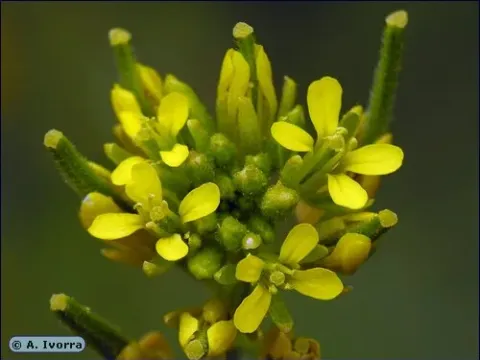
Flexuose mustard
Sinapis flexuosa
Flexuose mustard is an annual herbaceous plant belonging to the Brassicaceae family. Sowing is typically performed in early spring, once the soil temperature consistently reaches 5 to 8 degrees Celsius.
What the section contains
Flexuose mustard
The optimal time for planting is determined by reaching the physical maturity of the soil. This allows the seeds to utilize soil moisture accumulated during the winter, which is vital for uniform germination.
Seeds are sown at a depth of 2 to 3 centimeters, depending on the soil texture. In lighter, sandy soils, slightly deeper sowing is recommended to ensure the seed maintains contact with moist soil layers.
Seeding rates vary based on the cultivation goal, whether it is for grain production or green manure. Lower rates are usually employed for commercial grain production to allow plants to branch and develop fully.
The crop is typically sown in rows with spacing between 15 and 20 centimeters. Using high-quality certified seeds ensures better crop establishment and simplifies subsequent field operations.
Flexuose mustard has moderate environmental requirements, showing notable tolerance to spring temperature fluctuations. The ideal temperature range for vegetative growth is between 15 and 22 degrees Celsius.
The plant thrives in fertile, well-drained soils with a neutral or slightly acidic pH. Waterlogging and poor drainage are detrimental, as they can easily lead to root system decay and poor plant vigor.
Light intensity is a critical factor for successful growth. As a long-day plant, it requires adequate sun exposure; shaded conditions can cause stunted growth and reduced seed yield potential.
Balanced nitrogen, phosphorus, and potassium fertilization is essential for robust plant development. Nitrogen is particularly important during the early vegetative stages to ensure a full plant stand.
Good agricultural practices include early weed control. Because early growth can be relatively slow, preventing competition from fast-growing weeds is crucial for optimal crop development.
The yield of Flexuose mustard depends largely on the intensity of the management system and seasonal weather conditions. Under favorable conditions, the crop is capable of high productivity.
Average grain yields range between 1.5 and 2 tons per hectare when managed with modern intensive technology. Genetic potential allows for even higher results under optimized growing conditions.
Pollination success is a key driver of final yield. Insect-mediated pollination during the flowering period significantly increases pod set and the number of seeds per pod.
When grown for green manure, the crop can produce 20 to 30 tons of fresh biomass per hectare. This significantly improves soil structure and provides organic matter that enriches the soil profile.
Crop rotation is mandatory to maintain soil health and sustain yields. It is generally recommended not to plant mustard on the same field more than once every three or four years.
The primary pests affecting young seedlings are cruciferous flea beetles, which can cause significant damage in a short period. Preventive seed treatment and timely insecticide applications are often necessary.
The pollen beetle (Meligethes aeneus) can damage flower buds, leading to yield loss. Regular field scouting during the budding stage allows for timely intervention to protect the reproductive parts of the plant.
Fungal diseases like downy mildew and alternaria leaf spot are common, especially in humid conditions. High plant density can increase susceptibility by reducing airflow within the canopy.
Using treated seeds minimizes the risk of early-season infection. Furthermore, maintaining proper distance from other brassica crops helps in breaking disease cycles and protecting yield.
Integrated pest management (IPM) strategies, combining cultural and chemical controls, provide the most effective and sustainable approach to managing pests and disease while ensuring crop health.
Harvesting should occur when the seeds reach full maturity, characterized by a moisture content of 12 to 14 percent. Waiting too long can lead to pod shattering and significant harvest losses.
Two main methods are used: swathing and direct combining. Swathing is particularly useful if the field exhibits uneven ripening or significant weed pressure, as it allows for uniform maturation.
During swathing, the crop is cut and left to dry in rows before being threshed. This process ensures the seeds reach their optimal quality while drying naturally in the field environment.
Direct combining is standard when using desiccant chemicals to dry the crop on the stalk. This method speeds up the harvest schedule and minimizes the time the crop is exposed to potential weather risks.
Harvested seeds require immediate post-harvest cleaning and drying to reach storage moisture levels. Proper storage in well-ventilated facilities is essential to preserve seed quality for long-term use.