
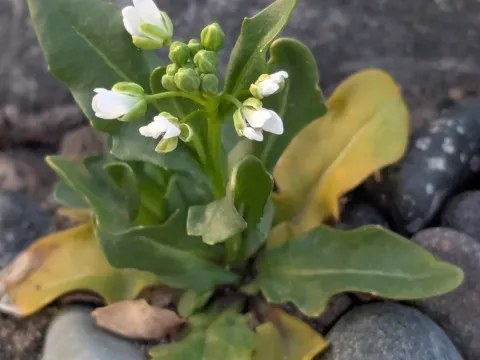
Field pennycress
Thlaspi
Field pennycress is classified as a cold-hardy plant, typically grown as either a winter or summer annual. Seeds are capable of germinating at very low temperatures, often starting as soon as the soil is workable in early spring, usually around +2 to +4 degrees Celsius.
What the section contains

Field pennycress
Winter forms of the crop are usually sown in late summer or early autumn. This allows the plants to establish a robust leaf rosette before winter, ensuring early development and seed maturity during the following spring cycle.
The optimal planting depth is shallow, generally ranging from 1 to 2 centimeters. Because the seeds are tiny, excessive depth can prevent the seedlings from reaching the surface, negatively impacting final stand density.
Due to high germination energy, pennycress displays rapid early growth. This aggressive development provides a competitive edge, allowing the crop to establish dominance over surrounding vegetation quickly.
In commercial operations, standard small-seed seeders are utilized. Proper row spacing is crucial to ensure adequate airflow through the canopy, which helps maintain plant health throughout the vegetative stage.
As a member of the Brassicaceae family, field pennycress shows remarkable ecological adaptability. It thrives in a wide array of soil types, including sandy loams, heavy clays, and fertile chernozems, making it a versatile crop.
The plant is highly photophilous and requires full sun exposure for maximum yield. Shading from taller crops or trees can lead to etiolation, reduced branching, and significantly lower overall seed production.
Pennycress has moderate moisture requirements. While it grows best in well-moistened conditions, its well-developed root system allows it to withstand short-term drought periods better than many other small-seeded crops.
A neutral to slightly alkaline soil pH is ideal for optimal nutrient uptake. On acidic soils, development may be stunted; therefore, liming is recommended for high-yielding cultivation areas.
While the crop is generally low-maintenance, nitrogen fertilization at the early vegetative stage can significantly boost biomass accumulation and improve final seed weight and oil content.
Field pennycress is increasingly recognized as a high-potential industrial oilseed crop. The seeds possess a significant oil content, making them a valuable feedstock for the sustainable biofuel and biodiesel industry.
With proper agronomic practices, seed yields typically range from 10 to 15 centners per hectare. These figures can fluctuate based on soil fertility, local rainfall patterns, and the effectiveness of weed and disease control.
Beyond its seed potential, the plant serves as an effective green manure or cover crop. It improves soil structure and suppresses soil-borne pathogens, effectively enhancing the land for subsequent primary crops.
The crop is also a significant early-season honey plant. By providing nectar and pollen early in the spring, it helps strengthen bee colonies before the primary nectar flow from other agricultural crops occurs.
Modern breeding programs are focused on developing varieties with larger seeds and increased oil concentration, aiming to improve the economic viability of pennycress for large-scale agricultural enterprises.
Cruciferous flea beetles are the most common and damaging pests for field pennycress. These insects can devastate seedling stands in a matter of days by feeding on cotyledons and young leaves.
Fungal diseases, particularly downy mildew, thrive in high-humidity conditions. Severe infections can lead to premature senescence of the foliage and significant reductions in both plant vigor and seed yield.
White rust is another common pathogen causing noticeable white or yellowish pustules on leaves and stems. Management involves avoiding high plant density to keep the canopy dry and discourage fungal spore spread.
The rape blossom beetle may threaten the crop during the budding phase. Regular field scouting is essential to identify infestations early and initiate appropriate integrated pest management strategies.
Maintaining a diverse crop rotation is the primary strategy for minimizing disease pressure. It is advisable to avoid planting pennycress in fields recently occupied by other Brassicaceae crops.
Harvesting should occur when the seeds reach full maturity, indicated by the straw-colored appearance of the pods. Care must be taken, as ripe pods are susceptible to shattering, which can lead to significant yield losses.
Direct combining is the standard method for large-scale production. Thresher settings, particularly drum speed and concave clearance, must be carefully adjusted to handle the small seeds gently and minimize mechanical damage.
If the field shows uneven ripening, desiccation may be utilized to dry down the biomass uniformly. This process simplifies the harvest procedure and ensures higher quality seed material for storage.
Post-harvest, seeds must be cleaned to remove debris and dried to a safe moisture content of 8–10 percent. Proper moisture management is essential to prevent mold growth and heating during storage.
The harvested seed should be stored in cool, well-ventilated facilities to maintain high viability and prevent the development of pests or spoilage agents.