
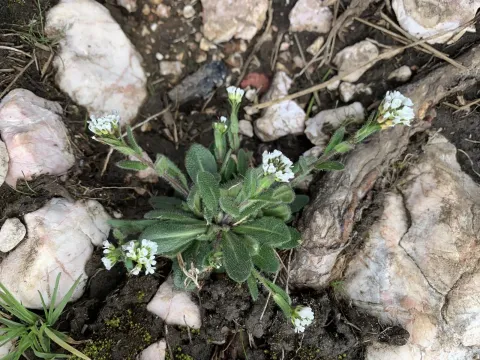
Fringed rockcress
Arabis ciliata
The fringed rockcress (Arabis ciliata) is a herbaceous perennial plant belonging to the Brassicaceae family. It is recognized by its distinct leaves with ciliated margins, an evolutionary adaptation that helps the plant survive in its harsh, exposed native habitats along coastal areas.
What the section contains
Fringed rockcress
The geographic distribution of this species is primarily concentrated in the temperate coastal regions of Western Europe. It is naturally adapted to sandy soils, stabilized dunes, and limestone cliffs where other common agricultural species struggle to establish due to salt spray and nutritional stress.
In terms of soil requirements, this plant thrives in well-draining, alkaline, and gritty substrates. It does not perform well in heavy, clay-based, or nutrient-rich soils, which can lead to rapid decay of the root system or excessive growth that lacks structural integrity.
Climate preferences involve mild, maritime environments with relatively stable temperatures throughout the year. As a heliophilic species, it requires full sun exposure to maintain its compact growth form and to encourage healthy flowering cycles during the spring and early summer months.
Cultivation practices should emphasize minimal disturbance and mimic the plant's natural sandy, open environment. Gardeners should ensure excellent drainage, as the plant is highly susceptible to root rot if moisture lingers in the soil, particularly during winter months when the plant enters dormancy.
Common pathological threats include fungal infections such as downy mildew or grey mold, which are often triggered by stagnant air and persistent humidity. These conditions compromise the structural integrity of the leaves and can lead to crown rot in poorly managed plantings.
Pests typical for the Brassicaceae family, such as flea beetles, pose the most significant risk to the foliage of the fringed rockcress. These insects chew small, circular holes in the leaves, which significantly reduces the plant's photosynthetic efficiency and aesthetic appeal.
Aphid infestations are also a frequent concern, particularly during the active growing season. These insects feed on the sap of young, tender shoots, causing leaf curling and potentially stunting the development of the flower stalks if left untreated.
Root system pests, specifically soil-borne nematodes, can become an issue if the soil conditions become overly saturated. These organisms impair the plant's ability to absorb essential nutrients and water, leading to a general decline in plant vigor.
Integrated pest management, including the use of neem oil or insecticidal soaps, is recommended when pest pressure is high. Maintaining proper spacing between plants is crucial to ensure good airflow, which is the most effective preventative measure against both pests and diseases.