
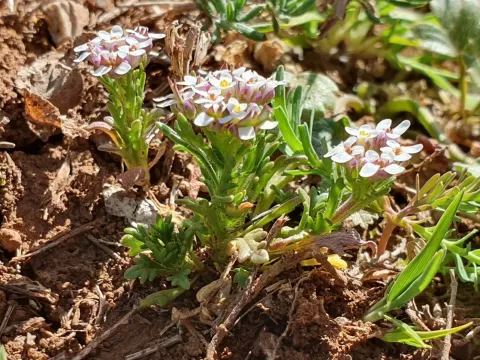
Scented candytuft
Iberis odorata
Scented candytuft, scientifically known as Iberis odorata, belongs to the Brassicaceae family and is widely valued for its pleasant fragrance and elegant appearance.
What the section contains
Scented candytuft
The seeds are typically sown directly into the prepared garden soil in early spring after the risk of heavy frost has completely passed.
It is recommended to plant seeds at a shallow depth of approximately 0.5 centimeters, as they require a certain amount of light for optimal germination rates.
Spacing is a crucial factor for healthy development; thinning out seedlings to reach 20 centimeters apart allows for better airflow and individual plant vigor.
Successive sowings every few weeks will extend the flowering period, allowing the garden to remain vibrant with white blooms throughout the warmer months.
This species thrives in full sun exposure, which is necessary to prevent leggy growth and to encourage the production of abundant, aromatic flowers.
Iberis odorata is highly adaptable to various soil types but performs exceptionally well in well-drained, sandy or light loamy soils with a neutral pH.
Watering requirements are relatively low, as the plant is drought-tolerant once established and performs poorly in heavy, waterlogged clay soils.
Proper drainage is essential; gardeners should avoid planting in areas prone to seasonal flooding to prevent root rot and other moisture-related issues.
While the plant can survive in nutrient-poor soils, a light application of balanced fertilizer early in the season can significantly improve the bloom density.
The most significant pathological threat to this culture is clubroot, a soil-borne disease that severely stunts root development and plant health.
Fungal leaf spots can occur during periods of high humidity, necessitating proper plant spacing to ensure adequate air circulation throughout the foliage.
Flea beetles are a common pest problem, particularly for young seedlings, as they can cause significant damage to the leaves within a very short period.
Management of pests often involves the use of specialized insecticides or preventive measures like row covers to physically protect the plants from insect attack.
Maintaining a strict crop rotation schedule by avoiding areas where other Brassicaceae crops were previously grown helps minimize soil-borne disease pressure.