
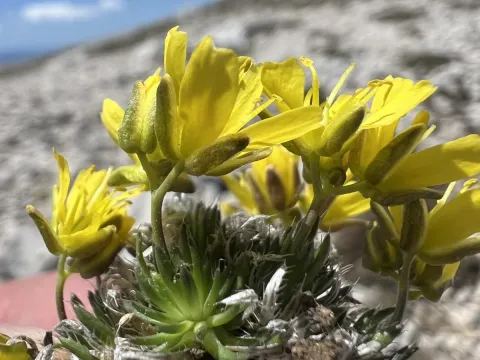
Rough-fruited whitlow-grass
Draba lasiocarpa
Draba lasiocarpa is a perennial herbaceous plant belonging to the Brassicaceae family. It is native to the mountainous regions of Central and Southern Europe, where it thrives in rocky environments, limestone cliffs, and scree slopes that provide excellent natural drainage.
What the section contains
Rough-fruited whitlow-grass
Botanically, this species is characterized by its basal rosettes of leaves and small, yellow flowers that bloom in early spring. It has evolved specific physiological mechanisms to survive in nutrient-poor environments, making it highly efficient at utilizing limited available resources.
Cultivation requires specific environmental conditions, primarily focusing on soil structure. The plant demands well-drained, gritty, and slightly alkaline soil to mimic its natural limestone habitat. Any significant water retention in the root zone is detrimental and usually leads to mortality.
The plant is highly adaptable to extreme temperature fluctuations, making it a robust choice for alpine gardening. It prefers full sun exposure to maintain its compact growth form; lack of sufficient light causes the stems to become etiolated and significantly reduces the plant's vigor.
Agricultural or commercial use is limited to niche ornamental horticulture. It is highly valued by rock garden enthusiasts for its ability to grow in crevices and withstand harsh weather conditions where many other species would fail to establish.
The main threats to Draba lasiocarpa are fungal pathogens, specifically those causing root rot, which are triggered by stagnant moisture or humid air. Ensuring proper air circulation around the basal rosette is a critical measure to prevent fungal outbreaks during the growing season.
Pests that commonly affect this plant include cruciferous flea beetles and various caterpillars that feed on the foliage. Routine inspections are necessary during the early stages of growth to mitigate potential damage, especially in areas where other Brassica crops are present nearby.