
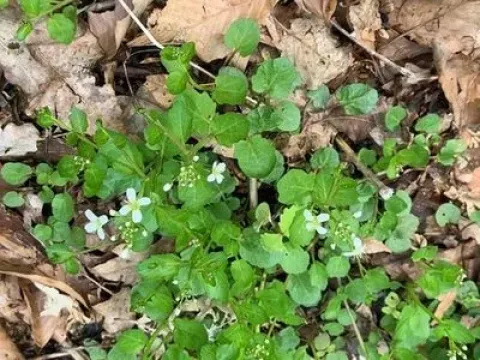
Round-leaf bittercress
Cardamine rotundifolia
Round-leaf bittercress, scientifically known as Cardamine rotundifolia, is a perennial herb belonging to the Brassicaceae family. It is typically found in cool, moist environments and propagates via seeds or rhizome division.
What the section contains
Round-leaf bittercress
Seeds should be sown in late autumn or early winter to undergo natural stratification. This cold period is essential for breaking seed dormancy and ensuring uniform germination in early spring.
When sowing, seeds should be barely covered with soil, as they require some exposure to light and have small energy reserves. A depth of 0.5 cm is ideal for optimal sprouting in greenhouse or garden conditions.
For vegetative propagation, rhizomes can be divided in early spring before the plant enters its rapid growth phase. This method ensures the new plants establish quickly in the prepared growing site.
Constant moisture must be maintained throughout the germination phase. The soil should be kept damp but not waterlogged to prevent the seeds from rotting before they have a chance to take root.
The primary requirement for Cardamine rotundifolia is a consistent supply of water. This plant thrives in habitats such as stream banks, seepages, and damp woodlands, requiring a site that simulates these conditions.
Shade or partial shade is the preferred exposure. Direct sunlight, especially in mid-summer, tends to dehydrate the plant and can cause scorching of the leaves, which reduces the plant's overall vigor.
The soil should be rich in organic matter and have a high moisture-retention capacity. Neutral to slightly acidic soil compositions are preferred for healthy root development and nutrient uptake.
Temperature-wise, the plant is well-adapted to temperate climates. It demonstrates strong winter hardiness, allowing it to survive frost cycles effectively when established in suitable outdoor locations.
Cultural practices should emphasize keeping the soil cool and moist. Mulching with leaf mold or compost is highly recommended to protect the root zone from evaporation and thermal fluctuations.
Flea beetles are the most common pests affecting this species. They feed on the tender leaves, creating small holes that can stunt the plant's growth if infestations are not controlled promptly.
Fungal issues, particularly downy mildew, may appear if air circulation is poor or if the foliage remains wet for extended periods in humid conditions. Thinning out overcrowded plants helps mitigate this risk.
Gastropods such as slugs and snails are significant threats to the foliage. Implementing manual collection or using non-toxic barriers is effective for managing these pests in small-scale plantings.
Root rot is a potential danger if the planting site suffers from stagnant water. Ensuring the substrate is free-draining while remaining moist is a balancing act necessary for the plant's survival.
Integrated pest management strategies focusing on beneficial insects and biological controls are advised to maintain the health of the bittercress without compromising its potential medicinal or culinary quality.