
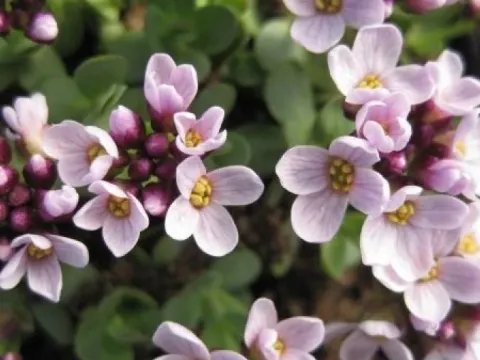
Round-leaved stonecress
Aethionema orbiculatum
Sowing of Aethionema orbiculatum seeds is best performed in autumn for natural cold stratification or in early spring under controlled conditions. The soil must be well-draining to prevent seed rot.
What the section contains
Round-leaved stonecress
Seeds benefit significantly from a stratification process, which ensures higher germination rates. An ambient temperature of 15–18 degrees Celsius is ideal for successful development.
Since the seeds are small, they require light for germination and should be sown near the surface, covered only by a thin layer of sand or fine grit.
Seedlings need moderate watering; caution must be exercised as this species from the Brassicaceae family is highly susceptible to dampening off in waterlogged soil.
Using a seed tray allows for better monitoring of the delicate plants until they are robust enough to be transplanted into their permanent location in the rock garden.
Aethionema orbiculatum is a member of the Brassicaceae family, naturally adapted to rocky, mountainous terrains. It demands full sun exposure to thrive and maintain its compact form.
The substrate must be alkaline and limestone-rich with excellent drainage capabilities. Heavy or acidic soils are unsuitable unless properly amended with grit and lime.
The plant exhibits remarkable drought tolerance, making it an excellent candidate for xeriscaping or specialized rock garden displays where water management is crucial.
Proper air circulation is essential to prevent the accumulation of moisture around the foliage. Stagnant air increases the risk of fungal infections in the root crown.
While the plant is generally hardy, it appreciates protection from harsh winter winds and excessive moisture during the dormant season to ensure plant longevity.
The primary threats to Aethionema orbiculatum are fungal pathogens triggered by high soil moisture levels. Root rot is a common issue if drainage is inadequate.
Preventive measures include ensuring that the planting site has a substantial slope or a deep layer of drainage material to keep the root zone dry.
Crucifer flea beetles can pose a risk by feeding on the leaves, especially during the spring growth flush. Regular inspections can help mitigate potential damage.
Aphids may occasionally infest the plant, weakening its vigor. Targeted applications of insecticidal soap or other controls can be used if an infestation occurs.
Maintaining a healthy, dry environment with good light exposure is the most effective way to prevent pests and diseases from impacting the plant's health.