
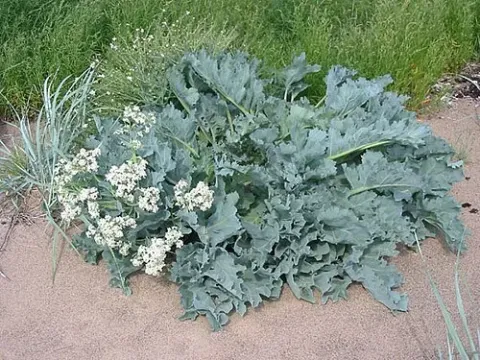
Crambe kralickii
Crambe kralickii
Crambe kralickii belongs to the Brassicaceae family. Sowing is typically carried out in early spring as soon as the soil warms up to 5–8 degrees Celsius, which allows for the most efficient use of stored winter moisture.
What the section contains
Crambe kralickii
Proper seedbed preparation is essential for high germination rates, as the crop is sensitive to planting depth. The optimal depth ranges from 2 to 4 centimeters, depending on the soil texture and the moisture content of the specific site.
In regions with mild winters, late-autumn sowing may be permissible to achieve early germination. However, the primary strategy for ensuring uniform stands remains the spring period, which eliminates the risk of frost damage to young seedlings.
The sowing pattern must allow for free development of the root system and the above-ground part of the plant. A wide-row method with spacings between 45 and 60 centimeters is generally used to facilitate field management during the growing season.
Regular monitoring of seedling emergence is a critical step, as young plants can be stifled by weed competition in the early growth phase. Timely inter-row cultivation helps control weeds while also improving soil aeration.
The crop is relatively drought-resistant due to its robust taproot system. It thrives in open areas with maximum sunlight exposure, which is essential for the photosynthesis and synthesis of organic compounds in the leaves.
Light sandy loam or structural chernozem soils with a neutral or slightly alkaline pH are preferred for Crambe cultivation. Heavy clay soils with poor drainage can lead to root rot, making effective moisture management a priority.
Crambe kralickii responds well to mineral fertilization, especially phosphorus and potassium, which strengthen the plant and promote the accumulation of sugars and oils. Nitrogen fertilizers should be applied moderately to avoid excessive vegetative growth.
The regional temperature must correspond to a temperate climate. While the plant can withstand temporary droughts, productivity significantly increases with moderate irrigation during the active rosette formation phase.
In industrial settings, a correct crop rotation scheme is vital. Crambe should not be sown after other members of the Brassicaceae family to prevent the accumulation of specific pests and pathogens in the soil profile.
The primary yield indicator for this crop is the production of dry roots or seed material. Productivity depends on soil fertility, plant density per unit area, and the specific weather conditions of the growing season.
When all agronomic requirements are met, root yields can reach commercial levels suitable for the processing industry. The primary use of the plant is aimed at extracting essential oils and industrial chemical compounds.
In the agricultural sector, varieties with high dry matter content in the root crops are particularly valued. The vegetation period required for reaching maximum biological maturity usually lasts several months, necessitating a frost-free interval.
Seed yield depends on pollination efficiency and the presence of pollinators, as the crop is entomophilous. Maintaining a healthy population of bees near the fields significantly boosts the output of high-quality seed material.
The economic efficiency of cultivating Crambe kralickii is also determined by the purity of the harvested product. Minimizing foreign matter and mechanical damage to the roots allows the raw material to fetch a higher market price.
Cruciferous flea beetles are among the most dangerous pests, capable of destroying young seedlings in the cotyledon phase. Control involves both biological methods and approved insecticides during the early developmental stage.
Leaf-eating caterpillars, such as cutworms and cabbage white butterflies, can cause significant damage to the foliage. Their presence requires constant vigilance and protective measures if the economic threshold is reached.
Among fungal diseases, clubroot (Plasmodiophora brassicae) poses the greatest threat, especially in acidic soils. Prevention requires maintaining proper soil pH balance and careful selection of preceding crops in the rotation.
Powdery mildew may affect the leaves under conditions of high humidity and heat, leading to premature senescence of the foliage and reducing the rate of nutrient accumulation in the roots.
Disease prevention includes using high-quality treated seeds and conducting preventative fungicide applications if adverse climatic conditions arise that favor pathogen proliferation.
Harvesting of root crops is performed at the end of the growing season when the plant enters a dormant state and the concentration of active components peaks. This usually takes place in autumn, before persistent freezing temperatures arrive.
Specialized root harvesters or plows are used to extract the roots from the soil with minimal damage. Maintaining the integrity of the root skin is essential for preserving quality during long-term storage.
After harvesting, the roots are cleaned of soil, sorted by size and fraction. Storage is carried out in facilities with controlled temperature and humidity to prevent the development of rotting processes.
If the goal is seed production, harvesting is carried out as the pods turn brown. It is crucial to avoid over-ripening, as seeds can shatter, leading to significant losses and volunteer plant growth in subsequent seasons.
Post-harvest processing includes drying the raw material to a stable moisture content. Proper drying is necessary to prevent spoilage during warehouse storage and to preserve the chemical composition that defines the crop's economic value.