
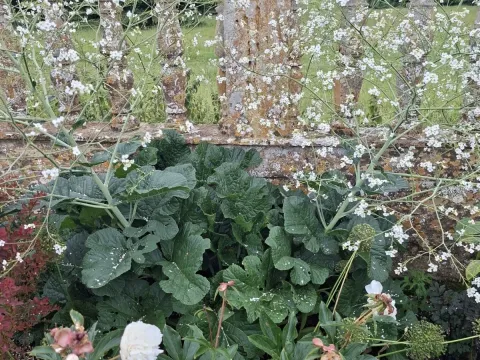
Crambe cordifolia
Crambe cordifolia
Sowing of Crambe cordifolia is typically performed using seeds, which require prior stratification to improve germination rates. The optimal time for sowing is during the late autumn period or early spring, as soon as the soil warms up.
What the section contains
Crambe cordifolia
The sowing depth in the ground should be approximately 2–3 centimeters, depending on the soil texture. It is important to ensure sufficient substrate moisture in the first weeks after emergence to support the development of a powerful root system.
In commercial cultivation, a wide-row method is used with spacing up to 60–70 centimeters, which facilitates future management of the crop. The planting layout must account for the significant spread of the aerial parts of the plant in subsequent years.
Crambe seeds possess high germination energy provided they are stored correctly in a dry, cool place. The use of high-quality seed material is a guarantee for uniform emergence and high plantation productivity.
To speed up the process of obtaining marketable produce, some agronomists employ the seedling method, although direct seeding into the open ground ensures better development of the taproot, which is critical for this crop.
Crambe cordifolia belongs to the Brassicaceae family and is a vigorous perennial plant that requires open, well-lit areas. It does not tolerate shading, which leads to leggy shoots and reduced nutrient accumulation in the roots.
The crop prefers fertile loamy or sandy loam soils with a deep arable horizon. High groundwater levels are detrimental to the plant, as they cause root system decay during the winter season.
The plant has high frost resistance and can withstand severe winters, making it a promising crop for temperate climates. An important factor is the absence of waterlogging, so areas with good drainage are preferred.
The soil must be deeply tilled before planting because the development of a strong, deep-penetrating root requires a loose structure. Incorporating organic fertilizers during the site preparation stage significantly increases yields.
Agrotechnics include regular weeding and inter-row cultivation, especially in the first two years of the plant's life. Crambe is very responsive to potassium-phosphorus fertilizers, which strengthen the plant's immunity before wintering.
The yield of Crambe cordifolia directly depends on the age of the plantation and the quality of care, reaching its peak in the third or fourth year of vegetation. During this period, the roots gain sufficient mass and accumulate maximum essential oils.
Average yields of marketable roots under intensive agricultural practices can range from 15 to 25 tons per hectare. These figures are strongly dependent on the moisture supply during the active growth phase.
The biological characteristics of the plant allow it to form impressive biomass, which is often used not only for root harvesting but also as an ornamental element in landscape design.
When harvesting, it is important to note that damage to the roots reduces their shelf life. Marketable value is determined by the root diameter, which should be at least 3–5 centimeters for use in the processing industry.
Regular fertilization allows for the maintenance of high plantation productivity for several years without a significant decline in produce quality.
The main pests of the crop are representatives of flea beetles, which damage young leaves in the spring. A massive outbreak of these pests can significantly slow down the plant's growth in the initial stages.
Among diseases, fungal infections such as clubroot (Plasmodiophora brassicae) are the most dangerous, especially when grown in acidic, waterlogged soils. Prevention is achieved through crop rotation and liming of the soil.
In conditions of high humidity, plants can be affected by powdery mildew, which negatively impacts the photosynthetic activity of the leaves. The use of preventive fungicides allows for minimizing losses.
Aphids and other sap-sucking insects can also pose a threat by extracting nutrients from young shoots and reducing the overall vitality of the plant. An integrated pest management system allows for effective control.
- Strict adherence to crop rotation (at least 4 years).
- Regular phytosanitary monitoring of the field.
- Removal of weeds that serve as reservoirs for infections.
Harvesting of Crambe cordifolia is carried out in the autumn when the aerial part of the plant begins to die back. By this time, nutrients are maximally concentrated in the roots, ensuring their nutritional value.
To extract the roots from the soil, specialized brackets or plows are used, allowing the roots to be cut at the necessary depth. It is crucial to avoid mechanical damage, as this accelerates the spoilage of the produce.
Immediately after digging, the roots are cleaned of soil, the remains of the aerial parts are trimmed, and they are sorted by size. During the preparation for storage, the produce is dried in a place protected from direct sunlight.
Storage of the roots is carried out in warehouses with regulated temperatures, close to zero, and high air humidity. This allows maintaining the turgor of the roots and their taste qualities until spring.
Post-harvest processing includes thorough washing and disinfection if the produce is intended for long-term sales or industrial processing in the food industry.