
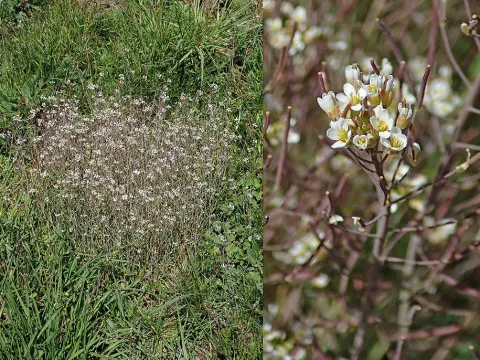
Cretan whitlow-grass
Draba cretica
Cretan whitlow-grass (Draba cretica) is a perennial herbaceous plant belonging to the Brassicaceae family. Its native habitat is centered on the rocky slopes and limestone terrain of Crete, where it has evolved to thrive in high-altitude environments characterized by specific microclimates.
What the section contains
Cretan whitlow-grass
The botanical structure of the plant consists of dense basal rosettes with pubescent leaves. This morphological adaptation allows the plant to manage water loss effectively, which is essential for survival on thin soils and rocky crevices where moisture retention is extremely limited.
Growing conditions for this species require a well-draining substrate, preferably a mixture of grit, sand, and alkaline soil. Because Draba species are highly susceptible to root rot, providing an excellent drainage layer is the most critical factor in their cultivation and long-term health.
Climate preferences for Cretan whitlow-grass include cool mountain temperatures and bright, direct sunlight. While it is hardy in its native Mediterranean alpine environment, it requires protection from excessive winter wetness, which can be detrimental to the crown of the plant during dormancy.
In terms of practical use, the plant is valued primarily as a specialist ornamental species for rock gardens and alpine houses. Its aesthetic appeal lies in its compact habit and ability to bloom effectively in challenging spots where traditional agricultural crops would fail due to soil poverty or environmental stress.