
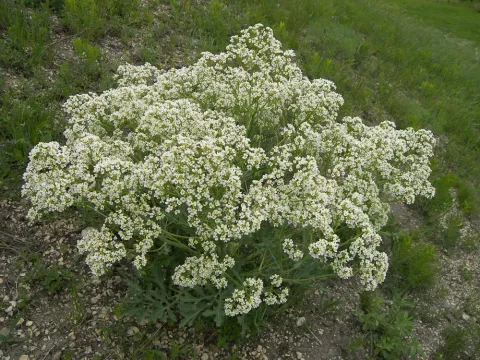
Crambe grandiflora
Crambe grandiflora
Sowing of Crambe grandiflora is typically performed in early spring once soil temperatures reach 5-8 degrees Celsius. Autumn sowing, conducted in late October, is also a viable option that allows for natural seed stratification during the winter, often resulting in more uniform germination.
What the section contains
Crambe grandiflora
The seeds should be sown at a depth of 2-3 centimeters, depending on the soil texture. Row spacing should be maintained between 60 and 70 centimeters to ensure the plants have sufficient space to develop their large basal leaf rosettes and taproots.
The standard seeding rate ranges from 4 to 6 kilograms per hectare. Proper seedbed preparation, including leveling and moderate compaction, is essential to maintain soil moisture in the germination zone and ensure consistent crop density.
Once seedlings have emerged, thinning is recommended to maintain an optimal distance of 30 centimeters between individual plants. This prevents overcrowding, which can significantly inhibit the development of the primary storage root.
During the early vegetative stages, seedlings require careful monitoring and weed control. Since the crop develops slowly at the beginning, keeping the field free from competitive weed species is critical for maximizing overall biomass production.
Crambe grandiflora belongs to the Brassicaceae family and is recognized as a hardy, multi-annual herbaceous plant with a deep taproot system. It thrives in open, sun-exposed locations, as it requires high light intensity for optimal growth and sugar accumulation.
The crop is not particularly demanding regarding soil fertility, but it performs best on light, sandy loam, or loamy chernozem soils. Poorly drained soils or areas with high water tables are unsuitable, as they promote root rot and severe plant stress.
An optimal soil pH for this crop falls between 6.5 and 7.5. On acidic soils, liming is a mandatory practice to ensure proper nutrient uptake and healthy plant development throughout the growing season.
Thanks to its deep taproot, the plant exhibits excellent drought tolerance, making it an ideal choice for cultivation in semi-arid regions. It can survive extended dry periods by accessing moisture from deeper soil layers where other crops would suffer.
Crambe grandiflora prefers moderate climates. While it can withstand fluctuations, prolonged exposure to extreme heat and lack of rainfall may induce a dormant state, potentially impacting the final yield of the plants.
Pest management for Crambe grandiflora focuses primarily on common cruciferous pests. Crucifer flea beetles are the most significant threat, capable of causing widespread damage to young, tender seedlings in the initial growth stages.
Other potential threats include larvae of cabbage butterflies, which can rapidly defoliate plants. In conditions of high humidity, fungal diseases such as Alternaria leaf spot or white rot may occur, especially if plants are grown in poorly ventilated conditions.
Integrated pest management (IPM) is the most effective approach for this crop. Preventive measures, including strict crop rotation, help to break the life cycles of common soil-borne pathogens and pests that specifically target Brassicaceae.
Crambe should not be planted following other cruciferous vegetables or oilseed crops. Placing it after cereals or summer-fallow fields significantly reduces the risk of pest infestation and ensures a healthier crop stand.
Regular field inspection is vital for the early detection of localized outbreaks. When necessary, targeted biological or chemical treatments can be applied according to local agronomic guidelines to preserve the health and productivity of the harvest.