
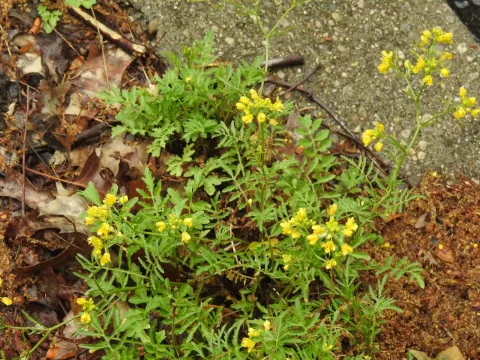
Creeping yellow-cress
Rorippa sylvestris
Creeping yellow-cress (Rorippa sylvestris) is a perennial herbaceous plant belonging to the Brassicaceae family. It is distinguished by its creeping rhizomatous habit, allowing for rapid colonization of new areas.
What the section contains
Creeping yellow-cress
This species is native to Eurasia and is commonly found in damp habitats, including riverbanks, wet meadows, and disturbed agricultural lands where moisture is abundant throughout the year.
The plant thrives in temperate climates and demonstrates a high tolerance for varying soil textures, provided that the water availability remains high and the soil structure is relatively loose.
Botanically, it features pinnately divided leaves and distinct yellow flowers arranged in terminal racemes. Its reproductive strategy relies heavily on vegetative propagation from broken rhizome fragments.
In terms of agricultural use, while young foliage is sometimes harvested for culinary purposes as a peppery green, it is widely recognized as a persistent weed that challenges crop productivity in moisture-rich fields.
Being a member of the mustard family, Rorippa sylvestris is susceptible to a range of pests and diseases that affect commercial brassica crops, including cabbages and mustards.
Flea beetles are the most prominent insect pests, often causing significant damage to the foliage during the early stages of growth by chewing small holes in the leaf blades.
Downy mildew and white rust represent the primary fungal threats, which tend to proliferate during periods of high humidity and poor air circulation in densely populated plant stands.
Clubroot, caused by the protist Plasmodiophora brassicae, poses a severe risk if the plant is present in fields intended for future brassica cultivation, as the weed can serve as a host.
Effective management strategies include manual removal of rhizomes and mechanical tillage, as chemical control can be difficult due to the plant's robust and deeply situated root system.