
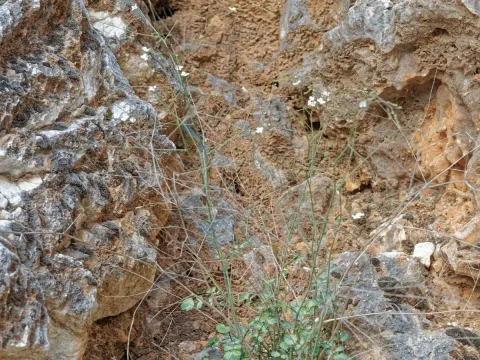
Crambe filiformis
Crambe filiformis
Crambe filiformis is a unique herbaceous plant belonging to the Brassicaceae family. Due to its limited distribution, it is considered a rare species that requires specific conditions for successful cultivation and propagation in agricultural settings.
What the section contains
Crambe filiformis
The sowing process is typically recommended for early spring or late autumn, allowing the seeds to undergo natural stratification. Precise soil preparation is vital to ensure that the delicate seeds can sprout effectively without excessive physical resistance.
A notable biological trait of this species is the long dormancy period of its seeds. Agronomists often suggest pre-treatment with growth stimulants to increase germination rates and ensure a more uniform emergence of seedlings across the field.
Seeds should be planted at a shallow depth of approximately 1.5 to 2 centimeters. This depth allows the fragile filaments to reach the surface while maintaining adequate moisture levels within the root zone during the critical early development phase.
Current research into the industrial cultivation of this crop focuses on finding optimal sowing densities. Proper spacing is essential to minimize competition for nutrients and light, which directly impacts the growth rate and overall quality of the plants.
Crambe filiformis thrives best in well-drained, loose soils with a neutral to slightly alkaline pH. The plant is highly sensitive to waterlogged conditions, which can quickly lead to root rot and other physiological stressors, making site selection critical.
The plant requires full sun exposure to maintain its structural integrity and metabolic vigor. Excessive shade significantly hinders its development, resulting in thin, weak stems that are prone to lodging and reduced seed production capacity.
Regarding moisture, the species demonstrates moderate drought tolerance once established. However, consistent water availability is necessary during the germination and early growth stages to support its development in varying environmental conditions.
Fertilization regimes should emphasize potassium and phosphorus to enhance plant resistance to temperature fluctuations. Nitrogen application must be carefully managed to prevent overly vegetative growth, which can make the plants more susceptible to pests.
The climate requirements involve moderate seasonal temperatures. The plant is adapted to survive cold winters, provided there is a protective cover, making it a hardy option for cultivation in regions with stable environmental cycles.
The primary agricultural threats to Crambe filiformis are typical of the Brassicaceae family, with cruciferous flea beetles posing the greatest risk to young seedlings. These pests can rapidly defoliate crops if not monitored closely during the early growth stages.
Fungal pathogens such as clubroot represent a significant threat to the root system, especially in soils that are too moist or lack proper crop rotation. Ensuring a break of at least three years between planting brassica crops is essential for disease prevention.
Slugs and snails can cause mechanical damage to the foliage, especially in damp conditions. Mechanical control measures, such as mulching with abrasive materials or manual removal, are often preferred over chemical options to protect the crop's health.
Weed management is a crucial factor in the survival of the crop, as the young plants are not highly competitive. Regular shallow cultivation between rows helps control weeds while improving soil aeration, which is vital for the health of the crambe roots.
Biological control agents are becoming a preferred strategy for protecting these crops from pests and diseases. By integrating these methods with good horticultural practices, farmers can maintain crop health while respecting the ecological requirements of the species.