
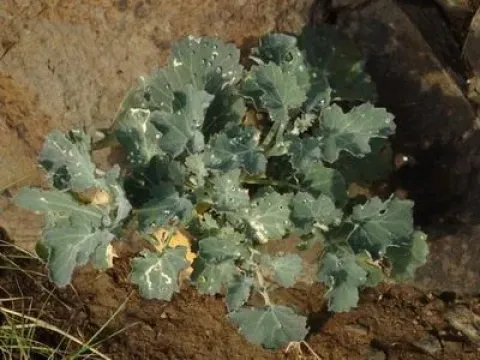
Crambe fruticosa
Crambe fruticosa
Crambe fruticosa, a member of the Brassicaceae family, is a perennial shrub that stands out for its resilience and unique ecological niche. Native to specific island environments, such as Madeira, it is well-adapted to rocky, volcanic soils and mild maritime climates.
What the section contains
Crambe fruticosa
The plant thrives in full sun and requires exceptionally well-drained, porous soils to maintain root health. Any accumulation of standing water during the winter months can be detrimental to its longevity, making site selection the most important factor in its cultivation.
Botanically, it features a woody base with sprawling branches, which requires sufficient space when planting in agricultural settings. It performs best in neutral to slightly alkaline soils, mimicking the conditions of its natural rocky habitats.
Agronomic management involves minimal irrigation once the plants are established, as they demonstrate significant drought tolerance. Fertilization should be moderate, as excessive nitrogen can lead to succulent growth that is more susceptible to fungal pathogens.
While often valued for its aesthetic appeal, there is ongoing interest in the genus Crambe for potential industrial applications. Its seeds are known to contain compounds that can be extracted for specialized agricultural or chemical products.
Crucifer flea beetles are the most significant pest threat to Crambe fruticosa, particularly during the early vegetative stages. These pests can rapidly defoliate young plants, necessitating careful monitoring and timely intervention.
Fungal diseases, including downy mildew and root rot, are common threats, especially if the planting density is too high. Improving airflow and maintaining a dry soil surface are essential cultural practices to mitigate these risks.
Cabbage moths and other lepidopteran larvae may occasionally infest the foliage, causing mechanical damage. Integrated pest management strategies, focusing on biological controls, are generally preferred to maintain the health of the plant.
Soil-borne pathogens such as Plasmodiophora brassicae can pose a severe threat, especially in soils that have previously hosted other Brassicaceae species. Strict crop rotation is necessary to prevent the buildup of these persistent organisms.
Proper sanitation, including the removal of dead or infected plant debris, is crucial for preventing the spread of diseases. Ensuring plants are healthy and not stressed by drought or nutrient deficiencies also significantly enhances their natural resistance to common threats.