
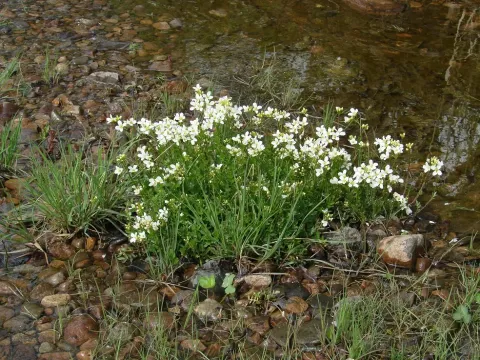
Creeping bittercress
Cardamine prorepens
Creeping bittercress (Cardamine prorepens) is a perennial herb belonging to the Brassicaceae family. It is characterized by its prostrate growth habit, often rooting at the nodes, which facilitates its rapid spread in suitable environments.
What the section contains
Creeping bittercress
Sowing is best performed in early spring as soon as the soil temperatures reach about 5 to 10 degrees Celsius. This timing ensures that the seeds benefit from natural soil moisture during the germination stage.
For cultivation, division of established plants is a very effective method of propagation. This can be done in early spring or autumn by separating the rooting sections of the stems and replanting them in prepared soil.
When using seeds, they should be sown shallowly, as many species in this genus require light to germinate efficiently. Covering them with a thin layer of fine soil or vermiculite is sufficient for successful establishment.
Maintaining proper spacing is essential to prevent overcrowding, which can encourage disease development. Planting at intervals of 25–30 centimeters allows the plant to form a healthy mat while maintaining air circulation.
This crop thrives in moist, well-drained, and nutrient-rich soils. It prefers organic-rich conditions, such as loamy or sandy loam soils that have a slightly acidic to neutral pH level.
It performs best in semi-shaded areas, as direct and intense sunlight can stress the plant and reduce the succulence of its leaves. A location that mimics its natural riverside or woodland habitat is ideal.
Regular irrigation is vital, as the plant does not handle prolonged drought well. The goal is to keep the soil consistently moist without creating stagnant water conditions that could lead to root rot.
Applying moderate amounts of compost or organic mulch helps maintain soil structure and moisture levels. Avoiding heavy use of synthetic fertilizers is recommended to preserve the plant's delicate flavor profile.
The crop prefers temperate climates with consistent moisture. In areas with harsh winters, providing a protective layer of mulch can help the root system survive until the next growing season.
The harvest primarily consists of the fresh, peppery leaves used in culinary applications. The crop can be harvested over a long period by picking individual leaves or cutting back stems to stimulate new growth.
Yield is maximized when the plant is kept in its vegetative phase by regularly removing emerging flower stalks. This process ensures that the nutrients are channeled into leaf development rather than seed production.
Commercial producers can achieve multiple cuttings per season if the growing conditions remain stable. Each harvest cycle should be followed by a light watering to encourage quick recovery and regrowth.
Post-harvest, the product should be kept in a cool, ventilated environment to prevent wilting. Because of its high moisture content, it does not have a long shelf life and is best marketed for immediate use.
Total annual yield is dependent on the duration of the growing season and the intensity of the light, as moderate light levels promote better leaf quality and flavor development in this specific species.
Crucifer flea beetles are the most significant pest for this crop, often targeting young foliage. Protective covers or companion planting with aromatic herbs can serve as effective integrated pest management strategies.
Slugs and snails can cause substantial damage to the leaves during damp, overcast weather. Physical barriers like copper tape or crushed eggshells can help protect the plants from these mollusks.
Fungal issues, such as downy mildew, may occur if the planting site lacks adequate air movement. Pruning and proper row spacing are key cultural practices to prevent these types of plant diseases.
Root rot is a common threat in areas with heavy clay soils or poor drainage. Ensuring the soil has adequate porosity and avoiding over-watering are the primary methods for preventing such losses.
Aphids might infest the undersides of the leaves during the warmer months, causing leaf curling. Regular monitoring and washing with water or insecticidal soap are typically sufficient to manage these populations.