
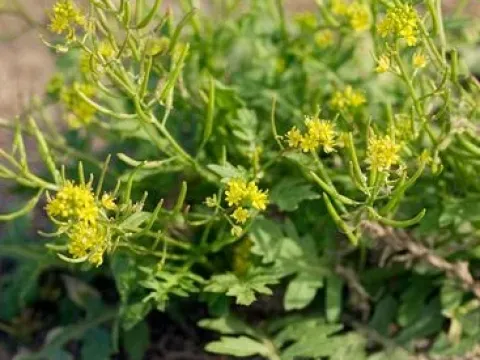
Curvepod yellowcress
Rorippa curvisiliqua
Curvepod yellowcress (Rorippa curvisiliqua) is an annual or biennial herbaceous plant belonging to the Brassicaceae family. While it is generally categorized as a weed rather than a commercial crop, understanding its biological cycle is essential for effective farm management.
What the section contains
Curvepod yellowcress
Native to North America, it has spread globally as an invasive species in various agricultural and wild habitats. The plant is particularly adapted to moist environments, often establishing populations in riparian zones, wetlands, and irrigated agricultural fields.
The botanical structure consists of erect or prostrate stems and pinnately lobed leaves. Its most distinctive feature is the curved pod, from which the name of the species is derived. The small, yellow flowers are arranged in racemes typical of the mustard family.
The plant thrives in moist, nutrient-rich soils with good sunlight exposure. Due to its high phenotypic plasticity, it can adapt to various soil textures, ranging from sandy banks to heavier silty soils commonly found in floodplain agriculture.
From an agricultural standpoint, it serves as a competitor for nutrients and water in vegetable and grain production systems. Its ability to produce high quantities of seeds ensures its persistence in the soil bank, making long-term control a necessity for sustainable farming.
Curvepod yellowcress is a significant vector for several diseases affecting Brassica crops, including clubroot (Plasmodiophora brassicae). Its presence near commercial fields increases the risk of soil-borne pathogen contamination.
It acts as a host for various agricultural pests, including flea beetles (Phyllotreta spp.) and diamondback moths (Plutella xylostella), which can migrate from the weed to cultivated crops, causing severe economic damage.
Integrated weed management programs should focus on moisture control and mechanical cultivation during the early growth stages of the plant to prevent seed maturation and dispersal.
Chemical control remains challenging because the weed shares physiological traits with common vegetable crops. Herbicide use must be targeted and calibrated to ensure that the cultivated varieties remain unaffected.
Ongoing monitoring of drainage ditches and field margins is critical. Removing individual plants before they reach the flowering stage significantly reduces the pressure on adjacent commercial crops during the growing season.