
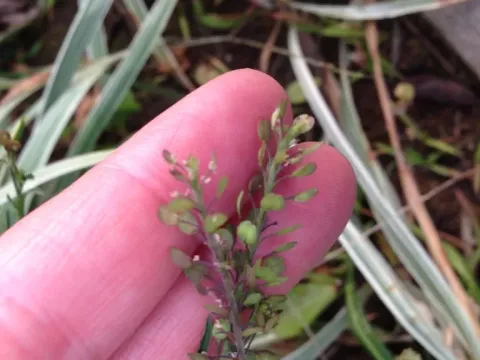
Costa Rican cress
Lepidium costaricense
Costa Rican cress (Lepidium costaricense) is a member of the Brassicaceae family, well-adapted to tropical conditions. In its native habitat, seeding is typically timed with the onset of the wet season to ensure consistent moisture for germination.
What the section contains
Costa Rican cress
For cultivation in controlled environments or greenhouses, seeds should be sown in rows spaced approximately 20 to 25 centimeters apart. This spacing facilitates proper airflow, which is essential for preventing humidity-related diseases.
The optimal soil temperature for germination ranges from 15 to 20 degrees Celsius. Seeds are very small and should be sown at a shallow depth of about 0.5 to 1 centimeter, covered lightly with fine soil or vermiculite.
Using a high-quality, well-draining seed-starting mix significantly increases success rates. Consistent moisture is vital during the first week, as the fragile seeds must not dry out during the critical stage of radicle emergence.
Successional sowing every two weeks ensures a continuous supply of fresh greens. This method is highly recommended for commercial producers aiming for a steady market presence throughout the season.
This crop thrives in fertile, well-drained loamy soils with a neutral pH. Incorporating organic matter, such as well-rotted compost, into the soil profile improves both structure and nutrient availability for the growing plants.
Costa Rican cress is a sun-loving plant that requires full exposure to thrive. Inadequate light conditions result in weak, leggy growth and significantly reduced flavor profiles, making site selection a critical factor for success.
Temperature management is crucial, with the ideal range being 18 to 24 degrees Celsius. Temperatures exceeding this limit often trigger premature bolting, where the plant shifts its energy from leaf production to flower development.
Regular, deep irrigation is necessary to maintain soil moisture levels. However, the plant is susceptible to root rot if left in waterlogged conditions, so ensuring the growing area has excellent drainage is mandatory.
Supplemental fertilization with nitrogen-based nutrients promotes vigorous leaf growth. Applications should be balanced to avoid excessive vegetative growth that could become prone to pest infestations or disease outbreaks.
Crucifer flea beetles are the most common pests affecting Costa Rican cress. These insects can cause extensive damage to young seedlings, making the use of floating row covers an effective preventive measure during the early growth stages.
High humidity and poor ventilation often lead to the development of downy mildew, a fungal infection that appears as yellowish spots on the leaves. Proper spacing and airflow are the best non-chemical defenses against this pathogen.
Clubroot, a soil-borne disease, can be a major issue if the soil pH is not properly managed. Crop rotation is essential to break the infection cycle and prevent the buildup of fungal pathogens in the soil.
Aphids may occasionally colonize the undersides of leaves, sucking sap and weakening the plants. Biological controls, such as introducing beneficial insects like ladybugs, can help manage populations in an organic growing system.
Regular monitoring of the crops allows for early detection of issues. Removing and disposing of infected plant material immediately can prevent the spread of diseases across the entire production field.
The harvest phase typically begins 30 to 45 days after planting, once the plants have developed a full, healthy rosette of leaves. Harvesting is ideally done in the early morning to capture the freshest, most crisp leaves.
Techniques include both single-cut harvests, where the entire plant is removed, or selective thinning, which allows smaller plants to continue growing. This flexibility is highly advantageous for small-scale fresh market production.
After cutting, the greens should be handled gently and cooled immediately. Post-harvest cooling is essential to extend shelf life and maintain the plant's natural crispness and aroma.
Storage should occur at temperatures between 0 and 2 degrees Celsius with high humidity. Proper packaging, such as perforated plastic bags, can help retain moisture without causing condensation that leads to decay.
Timing is everything in the harvest process; delaying harvest once the plant reaches maturity results in tougher leaf textures and a more pungent, bitter taste as the plant prepares for its reproductive stage.