
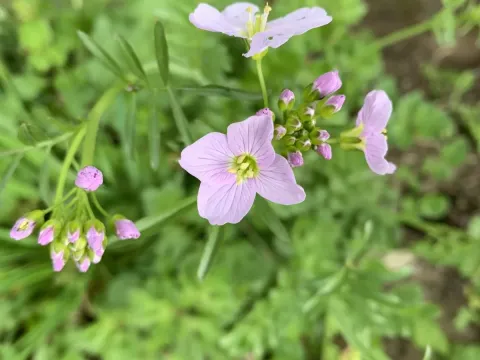
Cuckoo flower
Cardamine pratensis
The cuckoo flower (Cardamine pratensis) is a perennial herbaceous plant belonging to the Brassicaceae family. It is native to temperate regions of the Northern Hemisphere, where it thrives in damp meadows, riverbanks, and marshy grasslands.
What the section contains
Cuckoo flower
This crop requires consistently moist, fertile soil rich in organic matter. Agricultural success depends heavily on maintaining an adequate water supply, as the plant is highly intolerant to drought and performs best in environments with high humidity.
The plant is highly frost-tolerant and adapted to temperate climates. It prefers locations with partial shade or open sites with consistent soil moisture. It is particularly valued in early spring for its rapid development when temperatures begin to rise above 10 degrees Celsius.
From an agricultural standpoint, it is grown as a nutrient-dense salad green. The leaves possess a distinct pungent flavor due to the presence of glucosinolates, making it a valuable addition to spring vegetable production.
Propagation is primarily achieved through seeds or vegetative reproduction via leaf cuttings, which can regenerate roots when placed in contact with sufficiently damp soil during the growing season.
The main pathological threats include fungal infections such as downy mildew and root rot, which are triggered by waterlogging and inadequate air circulation within the plant canopy.
Flea beetles are the most significant insect pests, particularly affecting young plants by causing shot-hole damage on the leaves, which significantly reduces the aesthetic and commercial value of the crop.
Caterpillars of various white butterflies (Pieridae) can cause substantial defoliation during the peak summer months if not monitored and managed through timely interventions.
Integrated pest management strategies are crucial, focusing on crop rotation and removing wild Brassicaceae weeds that act as host plants for both pests and fungal diseases.
Due to the short growth cycle and the consumption of raw leaves, chemical control must be strictly limited, favoring biological insecticidal soaps or neem-based solutions if necessary.