
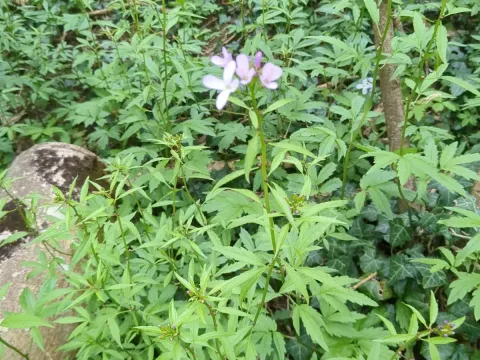
Coralroot bittercress
Cardamine bulbifera
Coralroot bittercress (Cardamine bulbifera) is a member of the Brassicaceae family, native to temperate woodland areas. It is widely recognized for its unique vegetative propagation through small bulbils.
What the section contains
Coralroot bittercress
The plant thrives in shaded or semi-shaded environments, mirroring its natural forest floor habitat. It requires fertile, humus-rich soil that is consistently moist but possesses excellent drainage properties.
Botanically, the plant is distinct due to the dark purple bulbils formed in the leaf axils. These bulbils fall to the ground and develop into independent plants, making the species highly effective at colonizing suitable areas.
Regarding climate, the plant prefers cool, stable conditions. It is highly resistant to low temperatures, surviving winter dormancy effectively under mulch or leaf litter, which is common in its natural range.
Soil management should focus on maintaining neutral to slightly acidic pH levels. Avoid sandy or extremely heavy clay soils that do not retain enough moisture to support the plant's delicate root structure during the growth season.
Fungal diseases are the primary threat to the crop, especially in conditions of poor air circulation. Root rot is a common issue when the plant is grown in waterlogged or heavy, compacted soils.
Pests such as slugs and snails are highly attracted to the lush foliage of the plant. They can cause significant damage to the leaves, particularly during damp spring and autumn weather conditions.
Crucifer flea beetles represent a recurring problem for many members of the Brassicaceae family. These insects cause pitting on the leaves, which can stunt the overall growth of young plants.
To maintain a healthy crop, growers should ensure adequate spacing between individual plants to prevent the buildup of humidity. Regular weeding is also essential to reduce competition for nutrients.
Integrated pest management strategies are recommended, emphasizing the use of traps for slugs and periodic inspections for early detection of flea beetle infestations during the spring growth flush.