
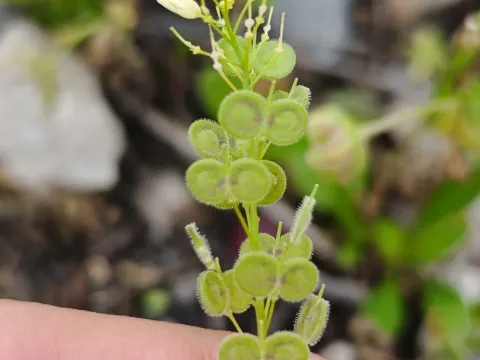
Biscutella
Biscutella L.
Biscutella L., commonly known as buckler mustard, is a diverse genus of herbaceous plants belonging to the Brassicaceae family. Its name originates from the distinct, two-lobed fruit shape that resembles a pair of spectacles or shields, making it easily identifiable in the field.
What the section contains

Biscutella
The native distribution of these plants spans across Europe, the Mediterranean region, and parts of North Africa. They are typically found in rocky, well-drained habitats such as limestone screes, meadows, and arid grasslands where survival requires significant adaptation to drought.
Botanically, Biscutella species are characterized by basal leaf rosettes and elegant, slender flowering stems. Their bright yellow inflorescences are a notable feature, typically blooming in late spring and early summer, serving as an important nectar source for pollinators.
From an agricultural standpoint, Biscutella is primarily utilized in landscape restoration and rock gardening rather than commercial food production. Its ability to colonize poor, alkaline soils makes it a candidate for stabilizing disturbed terrain and improving biodiversity in arid landscapes.
Cultivation requires conditions that mimic its natural habitat: full sun exposure and gritty, low-nutrient, high-alkalinity soil. Ensuring optimal drainage is the most critical factor, as these plants are highly susceptible to root rot if water is permitted to stagnate in the substrate.
As a member of the Brassicaceae family, Biscutella is susceptible to typical cruciferous pests, including flea beetles, which can cause significant damage to seedlings by riddling the leaves with small holes.
Fungal pathogens such as downy mildew can become an issue during periods of high humidity and stagnant air circulation, particularly in dense plantings where moisture cannot evaporate quickly from the leaf surface.
Aphids are another potential threat, often clustering on the tender flowering stems during the growth phase, leading to stunted development and reduced seed production if left untreated.
Invasive weed competition is often a greater threat to the establishment of this plant than pests, as Biscutella prefers sites with lower resource availability and can be easily outcompeted by aggressive grasses.
Management strategies involve practicing clean cultivation, maintaining proper spacing to ensure airflow, and avoiding over-fertilization, which encourages lush, succulent growth that is more attractive to both pests and fungal diseases.