
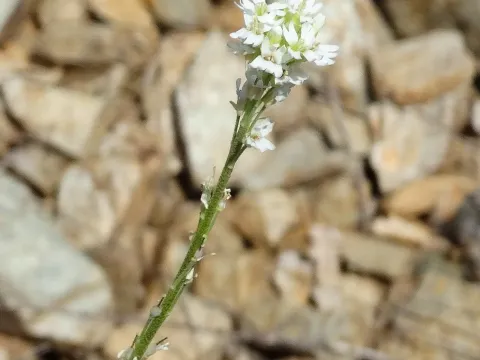
Berteroa obliqua
Berteroa obliqua
Berteroa obliqua is a member of the Brassicaceae family, sharing genetic traits with various oilseed crops. As a plant, it serves as a subject of interest for studying drought resistance and adaptation to marginal agricultural environments.
What the section contains
Berteroa obliqua
The plant thrives in temperate climates and is known for its remarkable ability to tolerate dry conditions. It prefers open, sun-drenched locations where competition for light is minimal, allowing for optimal physiological development.
Regarding soil requirements, this species is highly adaptable, showing a preference for well-drained, porous soils. It often colonizes sandy or rocky terrain where nutrient content is low, yet it maintains high structural integrity.
Temperature resilience is a hallmark of Berteroa obliqua. It exhibits significant tolerance to temperature fluctuations, being capable of surviving early spring frosts and thriving during the peak heat of the summer season.
Adequate air circulation is essential for the health of the crop, as high humidity and stagnant air can hinder growth and predispose the plant to various physiological stresses, negatively impacting the total biomass production.
Like many Brassicaceae members, Berteroa obliqua is susceptible to common cruciferous pests. Flea beetles are the primary concern during the seedling stage, as they can cause extensive damage to foliage.
The cabbage seedpod weevil may impact reproductive success by targeting the developing pods. Effective monitoring of these insect populations is crucial during the flowering and seed-set phases of the plant's life cycle.
Fungal diseases, including white rust and downy mildew, represent significant threats under cool, damp conditions. These pathogens can weaken the plant, reducing its vigor and limiting the production of viable seeds.
Integrated pest management strategies are recommended to mitigate the impact of these threats, emphasizing the importance of biodiversity and appropriate crop spacing to reduce the spread of infestations.
Maintaining a balanced ecosystem around the growing area can encourage beneficial insects, which act as natural predators to many of the common pests that affect the genus Berteroa.