
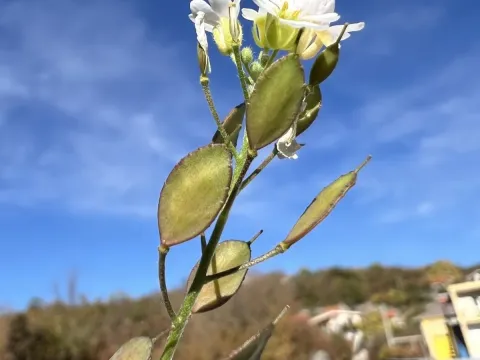
Berteroa mutabilis
Berteroa mutabilis
Berteroa mutabilis is a biennial or perennial herbaceous plant that shows high adaptability to sowing dates. In its natural environment, seeds germinate primarily in spring, once soil temperatures reach 8 to 10 degrees Celsius.
What the section contains
Berteroa mutabilis
For intentional cultivation, it is recommended to sow in late autumn or early spring into well-prepared, loose soil. The crop does not require deep seed burial; an optimal depth of 1–2 centimeters ensures uniform emergence of seedlings.
The plant possesses high germination energy, allowing it to quickly colonize the area. When sown in spring, the leaf rosette forms in the first year of life, while flowering and fruit production occur in the second vegetation period.
Sowing density should be managed, as this species is prone to self-seeding under favorable weather conditions. Using high-quality seed material guarantees an even distribution of the crop across the plot.
Agronomic management of the crop includes timely weeding during the initial development phase. The plant is responsive to moderate soil moisture during the rosette formation period.
Berteroa mutabilis prefers open, well-lit areas with moderately moist soil. As a member of the Brassicaceae family, the plant exhibits the resistance to adverse abiotic factors typical of this group.
The crop is not overly demanding regarding soil texture, but the best growth performance is observed in sandy loam and loam soils with a neutral or slightly alkaline pH reaction.
The plant tolerates short periods of drought well due to its taproot system, which can penetrate deep soil layers. Excessive waterlogging and stagnant water can lead to stunted growth.
Climatic conditions of the temperate zone are ideal for the complete life cycle of this plant. It demonstrates high frost resistance, allowing the plant to successfully overwinter as a rosette under snow cover.
Applying mineral fertilizers, especially nitrogen-based ones, during the early stages promotes intensive biomass accumulation. However, an excess of fertilizer is not a mandatory requirement for obtaining a quality yield.
As a representative of the Brassicaceae family, Berteroa mutabilis is susceptible to specific diseases affecting this group. One of the main threats is powdery mildew, which occurs in high humidity conditions.
Pests, such as flea beetles, can cause significant damage to young seedlings in spring. Damage to the leaf surface reduces the plant's photosynthetic activity.
Attacks by the pollen beetle are also possible during the budding period. This pest can damage the plant's reproductive organs, significantly reducing the yield of high-quality seeds.
To prevent the spread of infections and pests, it is recommended to follow crop rotation rules and maintain spatial isolation from other cruciferous crops. Regular monitoring of crop status is an effective protection method.
In case of massive pest infestations, the use of authorized biological or chemical insecticides is permitted. Preventive treatments should be conducted in strict accordance with the regulations for pesticide application.
Harvesting Berteroa mutabilis requires careful attention to the seed ripening phase, as the pods are prone to shattering if left too long. The optimal time is when the majority of the pods turn yellow.
The harvesting technique involves mowing the plants followed by drying in windrows or sheaves. This allows the seeds to reach the necessary moisture content and quality without significant losses.
After drying the plant mass, threshing is performed using stationary threshers or combine harvesters. It is important to adjust drum speed correctly to prevent mechanical damage to the seeds.
Seed cleaning is performed using separators to remove impurities, stem fragments, and damaged grains. The cleaned material is dried to a moisture content of 10–12 percent for long-term storage.
The harvested crop should be stored in dry, well-ventilated rooms protected from rodents and moisture. Adherence to storage conditions ensures the preservation of seed viability until the next season.