
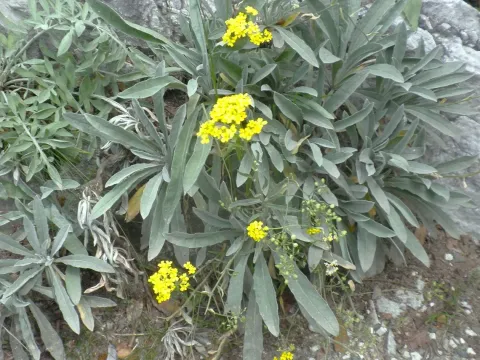
Aurinia corymbosa
Aurinia corymbosa
Direct sowing of Aurinia corymbosa seeds in the open field is best performed in early spring once the soil temperature is stable. Covering seeds with a very thin layer of soil is crucial as they require light for germination.
What the section contains
Aurinia corymbosa
For more predictable results, greenhouse sowing in late winter is advised. Using sterile, well-draining substrate helps prevent "damping-off" disease which commonly affects seedlings of the Brassicaceae family.
Transplanting seedlings to their final location should be done carefully to avoid root disturbance. The plants exhibit better survival rates when moved with a substantial root ball during overcast weather.
Spacing is essential for the health of the plants; a minimum distance of 30 to 40 centimeters should be maintained to allow for adequate air circulation between mature specimens.
Autumn sowing is also a viable option in milder climates, allowing seeds to experience natural stratification which often improves the uniformity of spring emergence.
Aurinia corymbosa, belonging to the Brassicaceae family, is a compact perennial adapted to rocky environments. It thrives in conditions that mimic its native alpine or mountainous habitats.
The plant demands full sun exposure to maintain its dense, cushion-like habit. If grown in partial shade, the stems tend to become leggy and the flowering intensity is significantly reduced.
Excellent drainage is the most critical factor for successful cultivation. It thrives in gritty, alkaline, and nutrient-poor soils, which prevent the risk of waterlogging and subsequent root decay.
It is a highly drought-tolerant species once established. Supplemental irrigation is only necessary during extended heatwaves or prolonged periods of drought, and even then, it should be kept to a minimum.
This species is exceptionally cold-hardy and does not require winter protection. However, it is vital to ensure that the site does not accumulate standing water, which is the primary cause of winter loss.
The most common disease threat is root rot, directly linked to overwatering or poor soil drainage. Symptoms include wilting and yellowing of the foliage, often followed by complete plant death.
Powdery mildew can occur in humid and stagnant conditions. While usually not fatal, it diminishes the aesthetic value of the plant and weakens its overall vigor over the long term.
Flea beetles are the primary pests that damage leaves, especially during the early growth stages in spring. These insects can quickly consume large portions of the foliage if left unchecked.
Cultural control methods such as maintaining good hygiene and removing debris are effective in reducing pest pressure. Consistent monitoring allows for early detection of potential outbreaks.
Applying fungicides is typically reserved for severe cases. Using copper-based or sulfur-based treatments is often effective, provided that environmental guidelines for the garden are strictly followed.