
Balearic cabbage
Brassica balearica
Description
Growing requirements
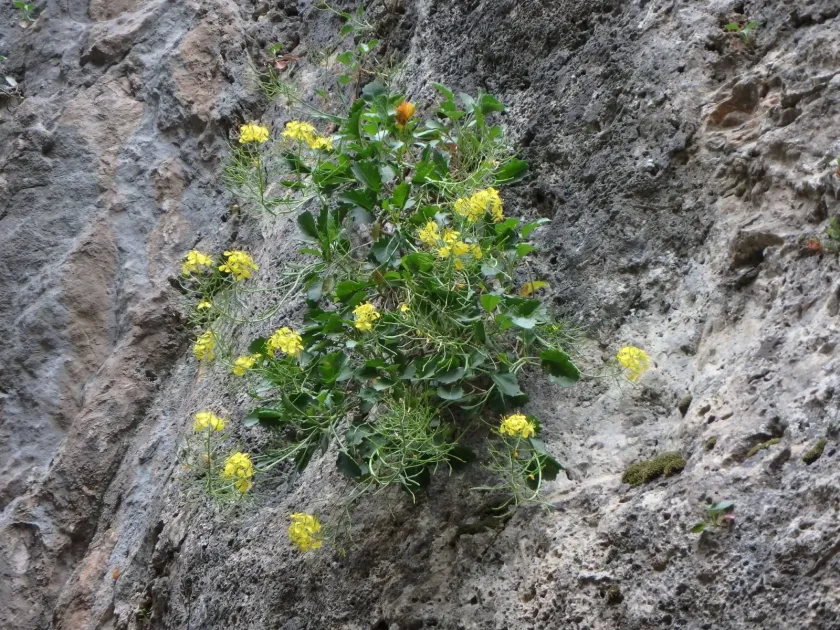
Brassica balearica is a distinct species within the Brassicaceae family, endemic to the rocky limestone habitats of the Balearic Islands, particularly Mallorca. It stands out due to its specialized adaptation to harsh Mediterranean climates.
The plant grows as a semi-shrub with a woody base and a rosette of succulent leaves. This morphological structure allows the species to retain water during the hot and dry summer months, minimizing transpirational loss.
Regarding soil requirements, this species thrives in alkaline soils rich in calcium carbonate. Effective soil aeration is essential, as the roots are highly susceptible to hypoxia and rot when exposed to waterlogged conditions.
Environmental conditions must mimic its native habitat to ensure health. The plant requires intense solar radiation and does not tolerate high humidity or frost, making it suitable only for specific microclimates if cultivated outdoors.
In terms of agricultural utility, Brassica balearica is primarily regarded as a genetic reservoir. Its natural resilience to nutrient-poor soils and drought is of significant interest to breeders aiming to improve hardiness in commercial Brassica crops.
Main diseases and pests
The primary threats to this species include fungal infections, such as clubroot, which target the root system, particularly when soil drainage is insufficient.
Insect pests, including various species of flea beetles and cabbage caterpillars, are significant threats to the foliage, which can cause severe defoliation if left uncontrolled.
Powdery mildew is a frequent issue in environments with stagnant air and moderate humidity, which can quickly spread across the leaf rosettes of the plants.
Competitive pressure from invasive Mediterranean flora often poses a survival risk in natural habitats, leading to localized population declines.
Effective management in experimental plots relies on precise monitoring, early detection of pest activity, and strict control of humidity levels to prevent disease outbreaks.