
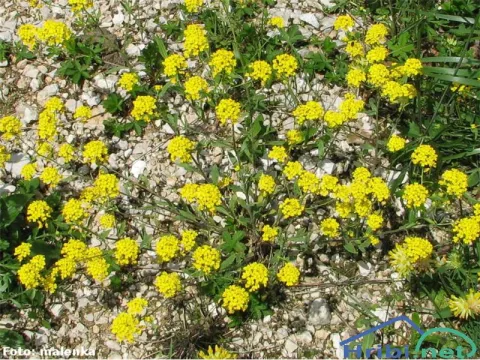
Aurinia petraea
Aurinia petraea
The seeds of Aurinia petraea are best sown in early spring once the danger of severe frost has passed and the soil begins to warm up.
What the section contains
Aurinia petraea
For greenhouse cultivation, seeds are sown in late winter to ensure vigorous seedlings that can be transplanted once the outdoor climate stabilizes.
It is crucial to sow the seeds shallowly, as they require light to germinate effectively, and covering them with too much soil will hinder growth.
When sowing in open ground, spacing should be carefully managed to allow for the natural sprawling habit that characterizes the mature plants.
Providing a light mulch of grit or sand around the seedlings helps maintain proper moisture levels while protecting the sensitive crown from rot.
Belonging to the Brassicaceae family, Aurinia petraea is a specialized rockery plant that thrives in dry, well-draining, and stony soil conditions.
The plant requires full sun exposure to flourish; any lack of sunlight will lead to elongated stems and a drastic reduction in flower production.
Adaptability to low-nutrient soils is a key feature of this species, making it highly efficient in environments where other crops struggle to grow.
Proper water management is essential; the soil must remain dry to slightly moist, as stagnant water is the primary cause of sudden plant failure.
Regular pruning after the blooming period helps maintain the plant's shape and encourages secondary growth, ensuring a healthy structure for the next season.
Fusarium wilt remains one of the most significant fungal threats, particularly during wet and humid summers that stress the root system.
Crucifer flea beetles are the most frequent insect pests, often causing significant aesthetic damage to the leaves during the early vegetative phase.
In conditions with poor air circulation, powdery mildew can emerge, covering the foliage with a greyish layer and reducing the plant's vitality.
Effective management includes keeping the surrounding area clear of debris and ensuring the plants are not overcrowded, which limits pest outbreaks.
If chemical intervention becomes necessary, targeted fungicides are recommended, though cultural control is preferred to maintain the plant's natural health.