
Awlwort
Subularia
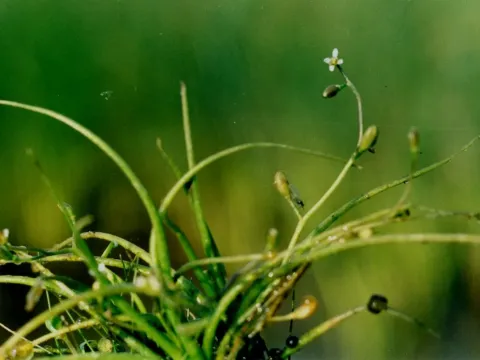
Awlwort (Subularia) is a genus of small herbaceous plants belonging to the Brassicaceae family. The most well-known species is the water awlwort, which develops as a hydrophyte in its natural habitat.
What the section contains

Awlwort
The plant prefers sandy or silty substrates on the bottom of shallow lakes, ponds, and slow-moving rivers. The most critical requirement for normal vegetation development is the presence of clean, cool water with low dissolved salt content.
From an agronomic and botanical perspective, the crop demonstrates high sensitivity to light levels. Optimal growth conditions are limited to shallow waters where sunlight can penetrate through the water column to the bottom substrate.
The geographic range of the awlwort covers the northern regions of Eurasia and North America. The crop favors temperate and arctic climates, demonstrating unique adaptation to short growing seasons in cold water environments.
Botanically, the plant is distinguished by characteristic awl-shaped leaves gathered in a basal rosette. Miniature white flowers can develop both above the water surface and in a submerged state, where self-pollination (cleistogamy) occurs.
The main threats to awlwort populations are anthropogenic water pollution, including eutrophication and siltation. Disturbance of the hydrological regime leads to the rapid displacement of the species by more aggressive algae.
The plant is virtually immune to classic agricultural pests due to its specific aquatic niche. However, it becomes vulnerable during sharp fluctuations in water levels, which cause mechanical damage to the rosettes.