
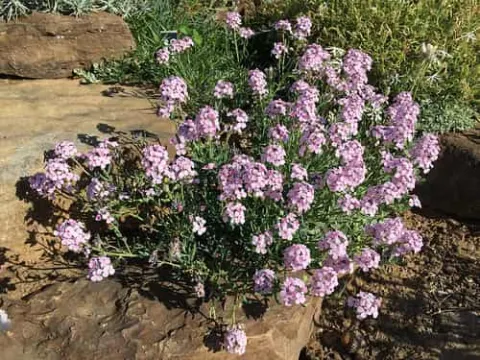
Armenian stonecress
Aethionema armenum
Sowing Armenian stonecress is typically done in late winter or early spring using a shallow seed tray filled with well-draining soil mix.
What the section contains
Armenian stonecress
Seeds should be surface-sown and only lightly covered with grit or vermiculite, as they require light and air circulation to germinate effectively.
Maintaining a cool temperature around 15–18 degrees Celsius helps in steady germination, which usually occurs within three to four weeks.
Once seedlings have developed two sets of true leaves, they should be carefully pricked out and transplanted into individual small pots.
Gradual acclimatization to outdoor conditions is necessary before planting them in a permanent, sunny location in the rock garden.
Aethionema armenum is a member of the Brassicaceae family, native to rocky mountainous regions, making it a perfect candidate for xeriscaping.
The plant strictly requires full sun exposure; planting it in shaded areas will result in leggy, weak growth and eventual loss of the plant.
Soil quality must prioritize drainage above all else; a gravelly, rocky, or sandy substrate with neutral to slightly alkaline pH is ideal.
As a drought-tolerant species, it requires minimal irrigation once established, surviving well even during hot and dry summer conditions.
Minimal fertilization is required, as overly nutrient-rich soil encourages excessive leaf growth at the expense of the plant's dense, compact form.
The most significant threat to Armenian stonecress is poor drainage, which leads to crown rot and fungal diseases during the winter months.
High humidity and poor air circulation in the garden can predispose the plant to powdery mildew, necessitating improved spacing and airflow.
Gastropods such as slugs and snails are common pests that can feed on young succulent leaves, especially during wet or overcast spring weather.
Aphids or flea beetles may occasionally affect young vegetative parts, which can be managed with organic insecticidal soaps if necessary.
It is crucial to remove any decaying plant debris from around the base of the plant to prevent the buildup of pathogens and moisture-loving pests.