
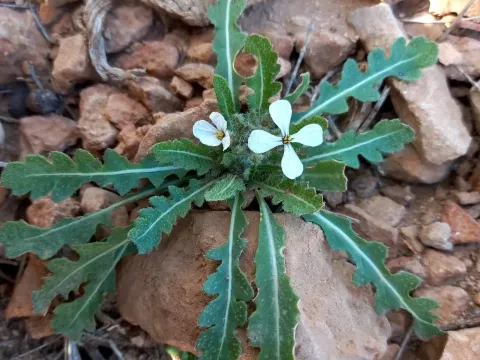
Arugula
Eruca Mill.
Arugula (Eruca sativa) is a fast-growing annual crop that thrives in cool weather. It is typically sown directly into the soil in early spring as soon as the ground is workable, at temperatures around 5-8°C.
What the section contains

Arugula
To ensure a continuous harvest throughout the season, seeds should be sown in succession every 10 to 14 days. This method allows for a steady supply of fresh, tender leaves for the market or kitchen.
Seeds should be planted at a shallow depth of approximately 1-1.5 cm. Germination is rapid, typically occurring within a week under favorable moisture conditions, which are critical for early establishment.
Proper spacing is essential to prevent overcrowding and premature bolting. A standard planting scheme involves rows spaced 15-20 cm apart, with individual plants thinned to 5-8 cm within the row.
Late summer sowings can also be performed, taking advantage of the shortening daylight hours, which helps suppress the plant's natural tendency to flower during the peak of summer.
Belonging to the Brassicaceae family, arugula prefers light, well-draining, and nutrient-rich soils. It performs best in neutral to slightly alkaline soil pH levels.
Consistent moisture is key; if the plants face drought stress, the leaves develop an excessively spicy, pungent flavor and become tough. However, waterlogged soil must be avoided to prevent root rot.
While the crop thrives in sunlight, partial shade is highly recommended during the height of summer. Excessive heat and long days trigger the plant to shift energy from leaf production to flower formation.
Soil preparation should involve the incorporation of well-rotted organic matter or compost before planting. Avoid heavy applications of fresh manure, as this can increase the risk of soil-borne diseases.
The optimal temperature range for vegetative growth is between 16°C and 20°C. Temperatures consistently exceeding 25°C generally result in stunted growth and a rapid decline in quality.
The average yield of arugula in open fields ranges from 0.5 to 1.5 kg per square meter, depending on the cultivar and environmental conditions. The crop cycle is exceptionally short, with harvest often ready in just 25 to 40 days.
Controlled environment agriculture, such as greenhouses or tunnels, can significantly enhance yield by regulating temperature and moisture, allowing for year-round production cycles.
Productivity is highly dependent on managing competition from weeds. Since the crop is fast-growing, dense weed growth can quickly overwhelm young plants, reducing the final marketable weight.
Modern breeding has focused on developing cultivars that are slower to bolt, providing a longer harvest window for producers and better leaf quality throughout the growing period.
Systematic harvesting of outer leaves can extend the life of the plant, though quality usually diminishes as the plant matures towards the reproductive stage.
The flea beetle is the most significant pest for arugula. These small insects can decimate a seedling crop in days by creating numerous small holes in the foliage, particularly during warm weather.
Using row covers or insect-proof netting is the most effective organic control method. It provides a physical barrier, preventing pests from reaching the young, succulent leaves without chemical intervention.
Fungal diseases like downy mildew and various types of leaf spots can appear if humidity remains high or if the planting density is too high, preventing adequate air circulation.
Effective crop rotation is a fundamental practice. Arugula should not follow other members of the Brassicaceae family, such as radishes or mustard, to break the lifecycle of common soil-borne pathogens.
Slugs and snails may become a nuisance in damp, cool conditions. Maintaining clear, weed-free pathways around the beds can help mitigate the population of these pests.
Harvesting is typically done when leaves reach 10-15 cm in length. Depending on the intended use, plants are either pulled up completely or carefully trimmed, allowing for possible regrowth.
Harvesting should be completed before the formation of flower stalks, as the leaves become bitter and overly tough once the plant moves into the reproductive phase.
Post-harvest handling is critical. Arugula has a high respiration rate and wilts quickly if not cooled immediately after cutting to remove field heat.
Proper storage involves cooling the produce to 2-4°C. When packaged in perforated plastic bags, the shelf life can be extended to 3-5 days in a refrigerated environment.
For wholesale distribution, bunching or packing into lightweight, ventilated plastic containers preserves the fresh, crisp appearance that consumers expect.