
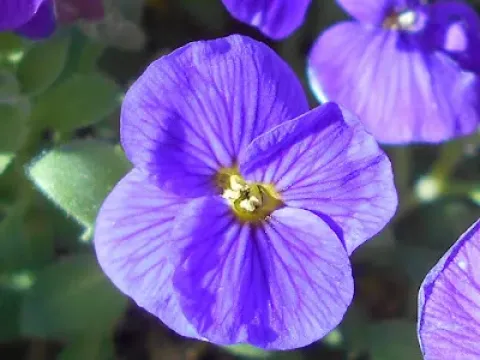
Aubrieta
Aubrieta
Aubrieta is a perennial herbaceous plant belonging to the Brassicaceae family, originating from Southern Europe and the Middle East, primarily growing in rocky and mountain habitats.
What the section contains


Aubrieta
In agricultural practice, seeds are sown in late winter or early spring in a greenhouse or cold frame to ensure strong seedling development before the outdoor planting season.
When sowing, seeds should be surface-sown on a light, well-draining substrate, as they require light to germinate effectively and should not be covered with a thick layer of soil.
The germination period can take up to several weeks depending on temperature, so maintaining consistent moisture levels without waterlogging is essential.
Seedlings should be hardened off before moving to their permanent outdoor location, which usually takes place in late spring after the threat of frost has passed.
Aubrieta thrives in full sun, which is crucial for producing its characteristic vibrant carpet of flowers, whereas shaded areas lead to leggy, weak growth.
The ideal soil for this crop is well-draining, neutral to slightly alkaline, and somewhat poor in fertility; it performs exceptionally well in rock gardens and retaining walls.
Watering requirements are moderate; the plant is relatively drought-tolerant once established but needs adequate hydration during the initial growth phase.
Maintenance involves cutting back the plants immediately after the first flush of flowering, which encourages a second, albeit smaller, bloom in late summer.
In terms of climate, Aubrieta is highly winter-hardy, although it requires protection from excessive moisture during winter dormancy to prevent crown rot.
The most common disease affecting Aubrieta is powdery mildew, which thrives in stagnant air and high humidity conditions around the foliage.
Aphids can cause significant damage to young shoots and buds during the spring, requiring timely inspection and, if necessary, treatment with horticultural soap.
Root rot caused by poor soil drainage remains the primary physiological threat, highlighting the necessity of planting in gritty, porous soil mixtures.
To minimize disease pressure, ensure that plants are spaced appropriately to allow for natural airflow and avoid overhead watering that keeps the foliage wet for extended periods.
Regular sanitation, including the removal of dead leaves and spent flower stems, is a standard agronomic practice to keep the plants healthy and prevent pest accumulation.