
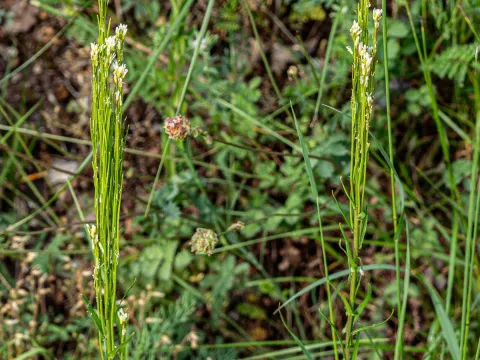
Arabis sagittata
Arabis sagittata
Arabis sagittata, commonly known in its botanical context, is a herbaceous plant belonging to the Brassicaceae family. This species is native to Eurasia and is often found in grassland habitats, meadows, and occasionally within agricultural fields as a volunteer plant.
What the section contains
Arabis sagittata
The plant thrives in well-drained soil conditions and prefers sunny, open environments. Its ability to colonize light, sandy, or stony soils makes it highly resilient, as its deep taproot system allows it to access subsoil moisture during dry spells.
Morphologically, Arabis sagittata is distinguished by its sagittate (arrow-shaped) leaves at the base, which are covered with coarse trichomes. These hairs serve a dual purpose: protecting the plant from excessive UV radiation and reducing transpiration rates during hot weather.
Regarding climate requirements, the plant shows strong adaptation to temperate climates. It is typically a biennial or winter annual, meaning it forms a leafy rosette during its first year, which allows it to withstand freezing winter temperatures before bolting in the spring.
In terms of agricultural management, the plant is often viewed as a competitive weed. It utilizes its early spring growth to establish dominance before many commercial crops have emerged, making it essential to manage its population density in early-season arable farming.
As a member of the Brassicaceae family, Arabis sagittata acts as a host for various pathogens that affect mustard, canola, and other cruciferous crops. Clubroot (Plasmodiophora brassicae) is one of the most severe threats that can persist in the soil through such hosts.
Flea beetles are the most frequent insect pests associated with this plant. They cause significant damage by feeding on the leaves, creating tiny holes that weaken the plant's structural integrity and make it more susceptible to environmental stress.
Powdery mildew represents a common fungal threat, particularly in humid or overcrowded conditions. It manifests as a white, powdery fungal growth on the leaves, which significantly inhibits the plant's capacity for efficient photosynthesis.
Aphid infestations are also prevalent, particularly during the flowering stage. These insects not only extract vital nutrients but also facilitate the transmission of viral diseases, which can subsequently impact neighboring economically important crops.
Managing these threats involves strict phytosanitary practices. Crop rotation is considered the primary strategy for limiting the accumulation of soil-borne pathogens and insect populations that rely on this species as an alternative food source throughout the season.