
Psiadia arabica
Psiadia arabica
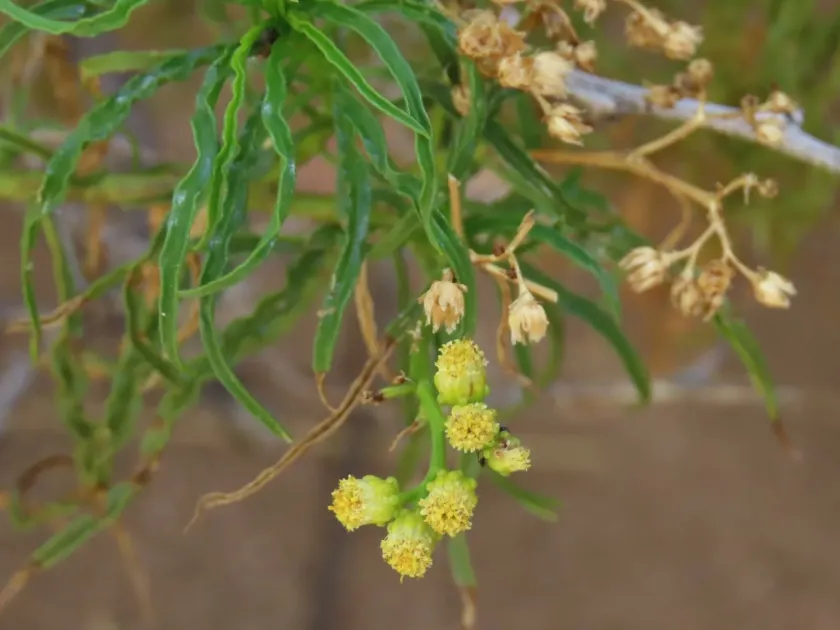
Description
Growing requirements
Psiadia arabica is a perennial subshrub belonging to the Asteraceae family, typically found in the arid environments of the Arabian Peninsula.
The plant is biologically optimized for survival in harsh desert conditions, characterized by its ability to thrive in extremely poor, rocky, and saline soils.
It acts as a xerophyte, utilizing specialized morphological adaptations, such as reduced leaf surface area and deep root systems, to access limited moisture.
Optimal growth requires high solar radiation and a thermal regime that includes warm to hot temperatures throughout the majority of the growing season.
In modern agricultural contexts, this species is being studied for its potential in desert greening initiatives and its yield of secondary metabolites with high commercial value.
Main diseases and pests
While naturally resilient to many stressors, Psiadia arabica remains susceptible to fungal infections if soil drainage is compromised.
Root rot is the primary physiological threat, usually triggered by waterlogging in clay-heavy soils or poorly planned irrigation schedules.
Pest pressures primarily include aphids and sap-sucking insects that target the soft, newly developing tissues during the spring growth phase.
Infestations are often managed through integrated pest management (IPM) practices, prioritizing biological control agents to maintain the chemical profile of the plant.
Regular monitoring of field conditions is essential to detect early signs of chlorosis or fungal spots, which indicate an imbalance in mineral nutrition or excessive humidity.