
Psiadia punctata
Psiadia punctata
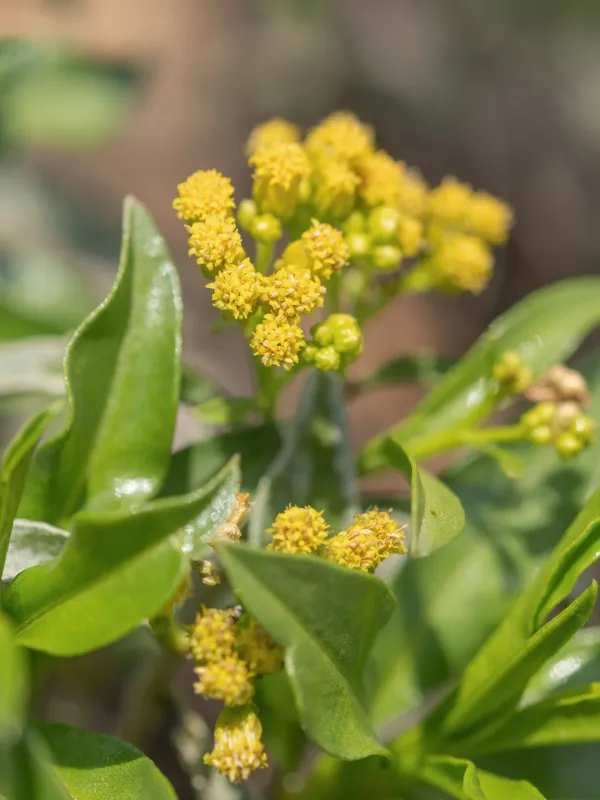
Description
Growing requirements
Psiadia punctata is a perennial shrub belonging to the Asteraceae family. It is indigenous to the Mascarene Islands, where it thrives in coastal habitats exposed to wind and saline conditions, demonstrating significant ecological plasticity.
From an agronomic perspective, the crop requires light, well-draining soil types, such as sandy loams, to prevent root rot. It is sensitive to waterlogging, which can be detrimental to its overall development and biomass production.
Climate requirements include high solar radiation and consistent temperatures. It does not possess cold hardiness, making it suitable only for regions with mild winters or protected greenhouse environments.
Successful cultivation involves moderate water supply during the growth stages. Fertilizer application should focus on maintaining balanced mineral content to support the production of essential oils found within the foliage.
The plant has gained attention for its traditional and potential industrial uses, particularly in the extraction of specific aromatic compounds, which makes it a specialty crop for specific niche markets.
Main diseases and pests
Like many species in the Asteraceae family, Psiadia punctata is susceptible to infestation by spider mites and scale insects, especially when grown under glasshouse conditions.
Fungal pathogens represent a primary threat to crop health, particularly when humidity levels exceed optimal thresholds for the plant species, leading to root decay or leaf spots.
Crop management must include regular monitoring for signs of stress or infection to implement integrated pest management strategies promptly and effectively.
Proper plant spacing is essential to ensure adequate airflow, which is a key cultural practice in reducing the incidence of foliage-related diseases.
Sanitation of the growing area and the removal of infected plant debris are vital practices to maintain a healthy stand and ensure high-quality yields of the harvestable parts.