
Silver Psiadia
Psiadia argentea
Description
Growing requirements
Silver Psiadia (Psiadia argentea) is a perennial shrub belonging to the Asteraceae family. It is a distinctive plant species native to the Mascarene Islands, predominantly found on Réunion, where it grows in high-altitude volcanic landscapes.
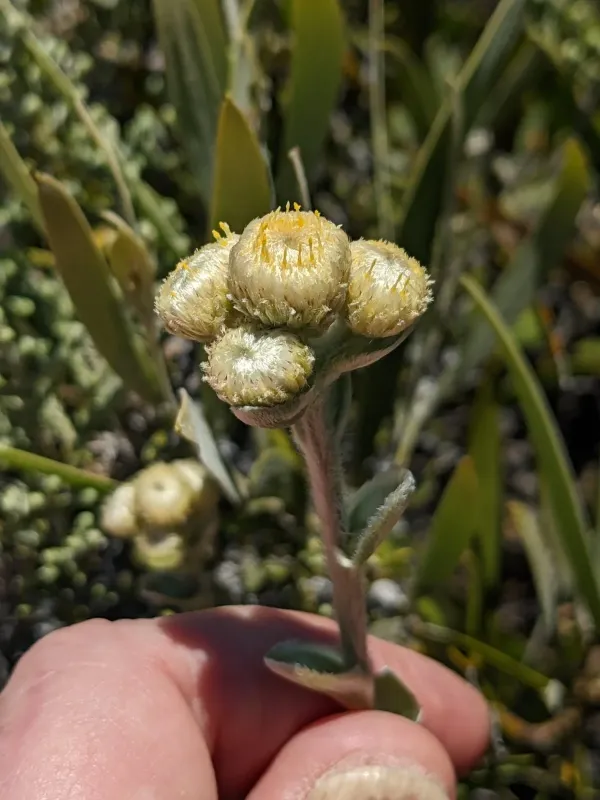
The plant is characterized by its silver-pubescent leaves, which provide a natural adaptation against high solar radiation and help reduce transpiration rates. This silvery appearance gives the plant both its common name and its ornamental value.
To cultivate Psiadia argentea effectively, growers must prioritize soil with excellent drainage. The plant thrives in volcanic or gravelly soils where water stagnation is impossible, as the root system is highly sensitive to hypoxia caused by excessive moisture.
Climate requirements for this species include stable subtropical temperatures with high light intensity. It performs best in areas that mimic its natural mountainous habitat, featuring cool nights and bright, sunny days throughout the growing season.
Agronomically, the plant is relatively low-maintenance once established, but it requires periodic pruning to maintain its vigor and structural integrity. Proper air circulation around the canopy is essential to prevent leaf blight and other moisture-related pathologies.
Harvesting
The primary agricultural interest in Psiadia argentea lies in its essential oils, which are highly valued in the cosmetic and pharmaceutical sectors. These oils exhibit significant antimicrobial and antiseptic properties, making them useful in topical treatments.
Harvesting is typically timed to coincide with the early flowering stage. This is when the glandular trichomes on the foliage reach peak density and essential oil synthesis is at its most productive level for commercial extraction.
Processing the harvested biomass requires prompt drying or immediate steam distillation. Because the oils are volatile, exposing the freshly cut material to prolonged heat or moisture must be avoided to prevent chemical degradation of the aromatic compounds.
Typical crop maintenance involves systematic row harvesting, where plants are kept at a height that encourages biomass regeneration. By managing the canopy density, producers can maximize the annual yield per hectare while ensuring the longevity of the perennial roots.
Future potential for this crop lies in standardized cultivation protocols that allow for sustainable, large-scale production. As the demand for natural anti-inflammatory agents rises, Silver Psiadia represents a stable and high-value niche market for specialized farms.