
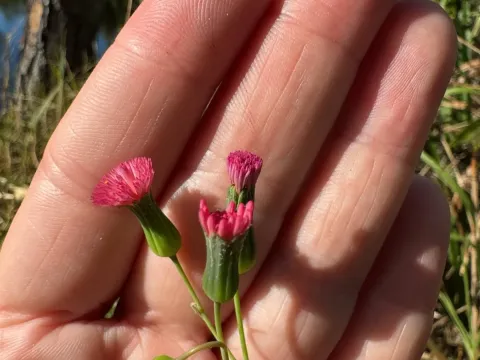
Emilia
Emilia
Emilia is a heat-loving annual herb that requires specific temperature conditions for successful seed germination. Sowing is usually carried out in March or April in greenhouse conditions to produce seedlings.
What the section contains


Emilia
If direct sowing in open ground is planned, it is necessary to wait for stable warm weather and complete warming of the soil. The optimal time for sowing in a permanent location is the second half of May, when the risk of spring frosts has passed.
The seeding depth is about 0.5–1 cm. Surface sowing is acceptable provided that stable moisture of the topsoil layer is maintained. Seedlings usually appear 10–14 days after sowing at a temperature of about +20 °C.
When growing from seedlings, thinning is carried out in the phase of two true leaves. Plants need good lighting to avoid leggy stems, which is critical for the quality of the future flower heads.
The planting scheme for flower beds depends on the variety but is usually 20–30 cm between plants. This ensures sufficient air circulation and reduces the risk of fungal diseases.
The plant originates from tropical regions of Asia and Africa, so it is extremely sensitive to low temperatures. Emilia prefers sunny, well-lit areas protected from strong winds that can damage the delicate flower stalks.
The crop has moderate requirements for soil conditions. The ideal option is light, sandy loam or loam soils with good drainage, as stagnant water is detrimental to the root system.
The pH level should be neutral or slightly acidic. Before planting, it is recommended to apply a moderate amount of organic fertilizers; however, an excess of nitrogen leads to excessive green growth at the expense of flowering.
Watering should be regular but moderate. During dry periods, it is important to keep the soil slightly moist while avoiding waterlogging. Emilia's root system does not tolerate prolonged overwatering.
The plant belongs to the Asteraceae family. It is characterized by elegant flower baskets, often called "tassels," which makes the crop highly valued in landscape design and floriculture.
The main problems with growing Emilia are related to poor irrigation management and inadequate ventilation of the site. Excessive humidity provokes the appearance of powdery mildew and various types of root rot.
Pests that most often infest this crop include aphids and spider mites. Aphids suck juices from young shoots and buds, leading to deformation and reduced decorative quality.
Spider mites become active in hot and dry weather. To control them, it is necessary to use acaricides and perform regular sprinkling if the plant condition allows.
To prevent the spread of infections, it is important to remove affected plant parts in a timely manner and avoid overcrowding. Following crop rotation rules also significantly reduces the risks of soil pathogen infection.
- Fungal infection prevention includes thinning of the plantings.
- Regular inspection of the underside of leaves allows for early detection of pests.
- The use of biological products is preferred during the flowering period to protect pollinators.