
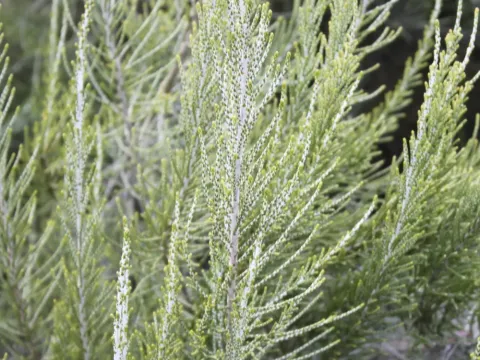
Elytropappus
Elytropappus
Elytropappus is a genus of perennial shrubs belonging to the Asteraceae family, native to the diverse fynbos vegetation zones of South Africa. These plants are biologically adapted to nutrient-poor, acidic soils, showing remarkable resilience in environments where many other crops would struggle to survive.
What the section contains

Elytropappus
The cultivation of Elytropappus requires well-drained, sandy or gravelly soils. Because of its evolutionary background, the plant thrives in areas with Mediterranean climate patterns, characterized by warm, dry summers and cooler, moist winters, making it highly drought-tolerant once established.
Adequate sunlight is a primary requirement for the healthy development of this species. It is a heliophilous plant, meaning its biomass accumulation is directly proportional to the amount of light exposure it receives throughout the day. Shade management is essential to prevent etiolation and maintain structural integrity.
Agronomic management involves minimal intervention, focusing mainly on soil aeration and weed control in the early growth stages. Since the plant is adapted to nutrient-poor soils, excessive fertilization can lead to physiological imbalances, so nutrient inputs should be strictly calculated based on soil testing results.
Beyond its ecological value, Elytropappus is often studied for its potential in land reclamation and soil stabilization projects. Its root structure helps secure loose soil particles, while its drought-resistant nature makes it a candidate for sustainable agroforestry systems in semi-arid regions.
Root rot pathogens, particularly those belonging to the Phytophthora genus, represent the most severe threat to Elytropappus plantations. These diseases proliferate in poorly drained soils where water stagnation creates ideal conditions for fungal spore germination and penetration into the root system.
Insect pests such as aphids and specialized leaf-eating mites frequently attack the foliage. Their feeding habits can lead to yellowing, stunted growth, and a significant reduction in the photosynthetic capacity of the plants, requiring targeted management strategies during peak growth phases.
Powdery mildew often emerges as a consequence of high humidity and insufficient air circulation among the shrubs. This condition can rapidly spread across the field, damaging the leaf surface and reducing the plant's overall energy reserves needed for subsequent growth cycles.
Vertebrate pests, specifically small rodents, can girdle the stems of young plants during the dormant season, which weakens the plant and predisposes it to secondary bacterial infections. Protecting young crops with appropriate barriers is a common recommendation for ensuring high survival rates.
To maintain plant health, farmers should practice strict sanitation, including the prompt removal of infected plant debris. Consistent monitoring allows for early detection of pest pressure, enabling the use of integrated pest management (IPM) to maintain productivity without excessive chemical reliance.