
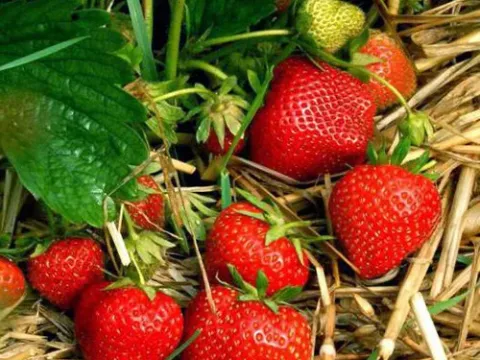
Elvira strawberry
Elvira
Planting of the Elvira strawberry variety is typically performed in spring once the soil temperature reaches 10-12 degrees Celsius, or in late summer during the August-September window.
What the section contains

Elvira strawberry
For optimal root system establishment during spring planting, maintaining consistent soil moisture levels is critical for the plants to acclimate to seasonal temperature fluctuations.
Fall planting is often preferred in temperate zones, as it allows the strawberry crowns to establish firmly and develop strong buds for the following year's crop.
Spacing should account for the variety's lush foliage, requiring a minimum of 30-40 cm between individual plants within rows to prevent overcrowding.
Rows should be spaced 50-60 cm apart, which facilitates proper air circulation and allows for easy access during cultivation and harvesting tasks.
Elvira thrives in sunny locations with fertile, well-drained loamy or sandy soils, maintaining a slightly acidic to neutral pH balance.
The variety is sensitive to waterlogged conditions, making raised beds an essential requirement in fields where groundwater levels are high or soil drainage is poor.
Regular fertilization with balanced mineral compounds is necessary, especially during the flowering and fruit-setting stages to support peak yields.
This variety exhibits notable cold tolerance, allowing for successful cultivation in northern climates without the need for intensive winter protection measures.
Applying mulch, such as straw, is highly recommended to preserve soil moisture, keep the fruit clean, and suppress competitive weed growth.
Elvira is highly productive, capable of yielding up to 1 kilogram of high-quality berries per plant when grown under intensive agricultural management.
The fruits feature a consistent conical shape, a deep red color, and an average weight of 25-40 grams, maintaining excellent firmness even in warmer weather.
The flavor profile is highly regarded, offering a sweet dessert-like taste with a distinct aroma, making the variety ideal for both fresh market and processing.
As a mid-early variety, it provides a reliable supply of fresh berries within a concentrated harvest window, maximizing commercial market potential.
Yield stability remains high over several years, although rotating the planting area every 3-4 years is advised to maintain fruit size and plant vigor.
The primary threat to Elvira plantations is gray mold (Botrytis cinerea), which can spread rapidly in humid conditions or where airflow is insufficient.
Proactive disease management involves thinning foliage, ensuring adequate spacing, and performing timely fungicide applications if environmental conditions favor fungal growth.
Root rot issues may arise if the irrigation regime is poorly managed, highlighting the importance of keeping the topsoil well-aerated.
Strawberry mites represent the most significant pest concern, as they can significantly restrict growth and lower overall production efficiency.
- Routine inspection for curled or distorted leaves.
- Implementation of integrated pest management (IPM) using biological controls.
- Maintaining strict sanitation by removing decaying plant debris after the harvest season.
Harvesting is best conducted during the early morning hours once dew has evaporated to ensure the berries retain their shelf life and quality.
Due to their firm texture, Elvira berries exhibit superior transportability, making them highly suitable for distribution to retail networks.
Harvesting frequency should be scheduled every 2-3 days to prevent over-ripening, which can degrade fruit quality and attract unwanted pests.
Berries should be picked with their stems attached to protect the delicate skin, which significantly extends the storage duration after harvest.
Post-harvest care involves clearing the area of excess foliage to prepare the plants for winter dormancy and reduce the overall infection pressure for the next season.